At-Home Facelift: Devices That Actually Lift Your Skin

An at-home facelift can deliver a visible, temporary lift for mild-to-moderate skin laxity. It will not replicate surgery, but the right device used consistently can produce real, measurable improvements in firmness and contour. As the New York Times reports, at-home methods primarily treat the skin’s surface and provide a temporary “zhuzh” rather than the deep tissue reconstruction a surgical procedure achieves. That said, for maintenance, prevention, and modest tightening, today’s devices are more capable than ever.
Top device categories to consider:
- Home HIFU/ultrasound devices (e.g., Soneda VividLift™ HIFU+Sono): deepest energy delivery, targets collagen remodeling at the dermal level
- Microcurrent handhelds (e.g., NuFACE Trinity): immediate temporary lift, best for jawline and cheekbone definition
- RF/EMS combo devices (e.g., Foreo BEAR 2, Medicube Age-R Booster Pro): firming and contouring with a stronger evidence base than single-function tools
- LED/multi-tech wands (e.g., Solawave Radiant Renewal Wand, Therabody TheraFace Depuffing Wand, Skin Gym LitLift): skin tone, texture, and depuffing support
Most people see a temporary effect within the first few sessions. Cumulative collagen-stimulating changes from RF or HIFU-class devices typically require several weeks of consistent use.
Key Takeaways
At-home facelift devices can deliver real, clinically supported improvements in firmness and skin tone for mild-to-moderate laxity when used consistently with the right protocol, but they do not replicate surgical results.
| Point | Details |
|---|---|
| Realistic expectations | Temporary lift is immediate; cumulative collagen changes require 8–12 weeks of consistent use. |
| Best device by goal | Microcurrent for jawline definition; RF/EMS for firming; HIFU-class for deeper collagen stimulation. |
| Safety first | Check FDA 510(k) clearance for high-energy devices; avoid use over active infections, implants, or during pregnancy. |
| Pair with skincare | Sunscreen, retinoids (on non-device days), and antioxidant serums improve and protect collagen gains. |
| Sonedaskincare VividLift | Combines HIFU and sonophoresis for deeper stimulation and hydration; backed by clinical data and a structured protocol. |
Table of Contents
- Which at-home facelift devices are worth comparing?
- How to choose the right at-home facelift device for your goals
- What does each technology actually do for your skin?
- What results can you realistically expect, and when?
- Safety, FDA notes, and who should not use these devices
- How to use your device safely and get the best results
- Who should choose what: a compact decision guide
- How skin type and age affect your device results
- The case for clinical-grade technology at home
- Sonedaskincare VividLift: professional HIFU technology for home use
- Sources
Which at-home facelift devices are worth comparing?
The table below covers the main device categories plus the Soneda VividLift, matched to goals, technology, price, evidence, and safety profile.
| Best For | Primary Technology | Price Range | Evidence & Timeline | Usage Frequency | Safety / Side Effects |
|---|---|---|---|---|---|
| Deep collagen lift, firming, hydration (Soneda VividLift™ HIFU+Sono) | HIFU + sonophoresis | $$$$ | Strongest home-device signal for collagen stimulation; 8–12 weeks for cumulative results; clinically tested | 1–2x per week per protocol | Transient redness; avoid over active acne, implants, pregnancy |
| Jawline definition, cheekbone lift (microcurrent handhelds) | Microcurrent | $–$$$ | Short-term lift well documented; modest cumulative benefit with daily use | Daily or 5x per week | Low risk; avoid pacemaker, pregnancy |
| Firming, contouring, skin texture (RF/EMS combo devices) | Radiofrequency + EMS | $$–$$$$ | Multi-energy devices show stronger signals than single-function tools; 6–12 weeks | 3–5x per week | Transient redness, warmth; avoid metal implants near treatment area |
| Skin tone, depuffing, texture (LED/multi-tech wands) | LED + microcurrent or vibration | $–$$$ | LED (red/near-infrared) has peer-reviewed support for collagen; depuffing is temporary | Daily to 3x per week | Very low risk; photosensitivity caution |
How to check U.S. regulatory status: The FDA maintains a searchable database of 510(k) clearances for medical devices. High-energy devices (RF, HIFU) should carry FDA clearance or be registered as a cosmetic device. Clearance confirms a regulatory review occurred; it does not guarantee cosmetic superiority.
Quick notes on the named devices:
- NuFACE Trinity: FDA-cleared microcurrent device; strong user satisfaction for temporary jawline lift; requires daily use for sustained results
- Foreo BEAR 2: Microcurrent + T-Sonic pulsations; app-guided; good for beginners
- Solawave Radiant Renewal Wand: Red light + microcurrent + facial massage; best for texture and mild depuffing
- Therabody TheraFace Depuffing Wand: Vibration-based lymphatic drainage; temporary puffiness reduction
- Skin Gym LitLift: LED-focused; entry-level price point; best for tone and texture maintenance
- Medicube Age-R Booster Pro: RF + EMS combo; Korean-engineered; targets firming and product absorption
How to choose the right at-home facelift device for your goals
Start with your primary concern, not the most impressive-looking device. A $400 microcurrent tool will not address deep structural laxity the same way a HIFU-class device might. Work through this checklist before buying.
Buyer checklist:
- Skin laxity level: Mild laxity responds well to microcurrent and LED. Moderate laxity benefits more from RF, EMS, or HIFU-class devices. Severe laxity warrants a dermatologist consultation first.
- Target area: Jawline and jowls respond best to microcurrent and HIFU. Under-eye puffiness suits vibration or LED wands. Full-face firming calls for RF or HIFU.
- Budget: Factor in replacement heads, conductive gels, and serums. A $150 device with $40/month consumables costs more annually than a $350 device with no recurring costs.
- Clinical evidence: Look for published studies or randomized trials, not just before/after photos. A PMC systematic review covering 18 clinical studies found RF, LED, and microcurrent devices can improve aging signs, though most studies used small samples and short follow-up periods.
- FDA 510(k) or equivalent clearance: Required for high-energy devices sold in the U.S. Check the FDA database directly.
- Warranty and return policy: A 30-day money-back window is a minimum standard for any device above $100.
Questions to ask before buying:
- How often does the manufacturer recommend using this device, and is that realistic for your schedule?
- Does the brand publish clinical data, or only testimonials?
- What are the replacement costs for heads, tips, or gels over 12 months?
- Is the device compatible with your skin conditions (rosacea, active acne, eczema)?
- Does the manual address interactions with retinoids or other active ingredients?
Red flags to avoid:
- Claims of “surgical results at home” or “permanent lift after one session”
- No safety instructions or contraindication list in the manual
- Opaque or missing clinical data (testimonials only)
- Excessive energy settings with no guidance on starting low
- No FDA clearance information for a high-energy device sold in the U.S.
What does each technology actually do for your skin?
Understanding the mechanism helps you match the right tool to the right concern. These are not interchangeable.
Microcurrent delivers low-level electrical current that mimics the body’s own bioelectric signals. It temporarily re-educates facial muscles and stimulates ATP production, which supports collagen and elastin synthesis. The lift is real but largely temporary, lasting hours to a day. Best for: jawline definition, cheekbone lift, immediate pre-event results.
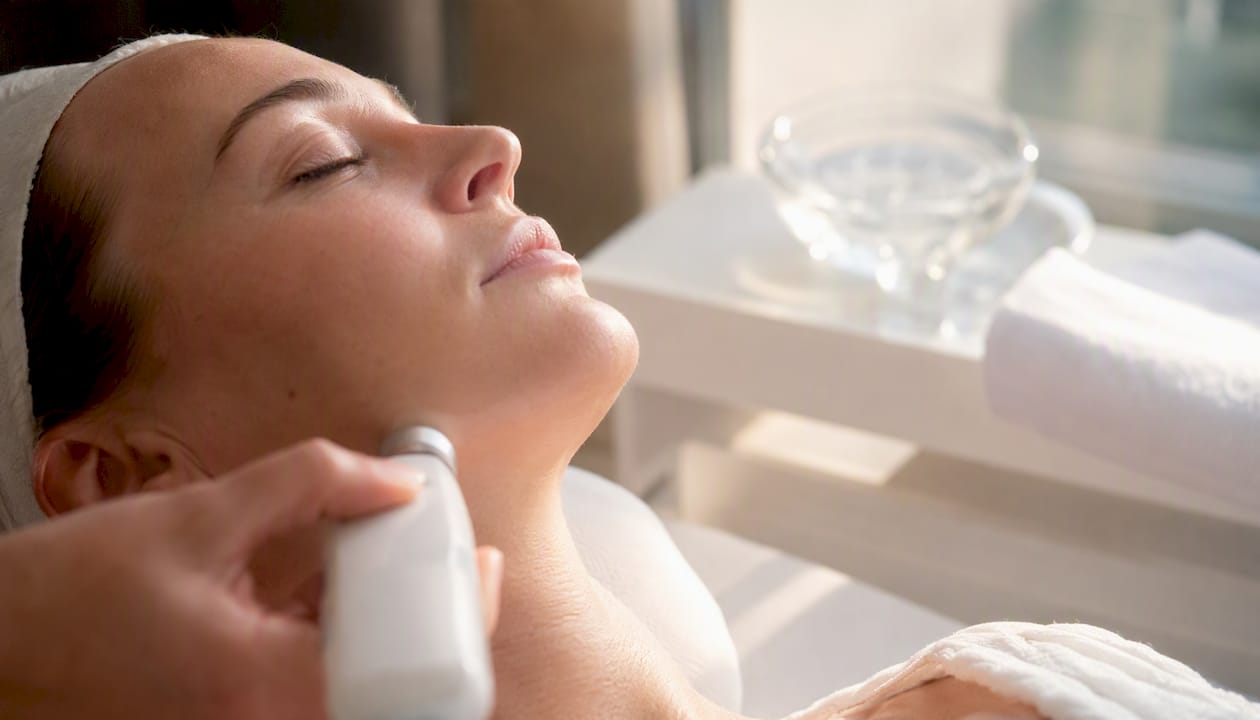
Radiofrequency (RF) heats the dermis to stimulate collagen remodeling. Home devices operate at lower energy than clinic machines, but consistent use over weeks can produce modest, cumulative firming. Multi-energy devices combining RF with EMS tend to show stronger improvement signals than single-function tools. Best for: overall firming, skin texture, mild-to-moderate laxity.
LED and low-level light therapy (LLLT) use specific wavelengths (red at 630–660nm, near-infrared at 830nm) to stimulate fibroblast activity and reduce inflammation. The evidence for collagen support is peer-reviewed. Best for: skin tone, texture, post-treatment recovery, and as a complement to RF or HIFU.
HIFU (High-Intensity Focused Ultrasound) focuses ultrasound energy at precise depths in the dermis and SMAS layer, triggering thermal coagulation points that stimulate new collagen. Home HIFU devices operate at lower intensities than clinical machines, but they reach deeper than microcurrent or LED. Best for: deeper collagen stimulation, lifting, and firming for moderate laxity.
EMS (Electrical Muscle Stimulation) and facial massage contract facial muscles directly, producing a temporary toning effect. Combined with RF or microcurrent, EMS adds a contouring dimension. Best for: facial contouring, muscle tone maintenance, lymphatic drainage.
Pro Tip: Sequence your treatments: use LED or a gentle massage wand first to prep circulation, then apply your RF or HIFU device on clean, gel-prepped skin. Avoid using a high-energy device immediately after applying retinoids or strong acids — wait at least 24 hours to reduce irritation risk.
What results can you realistically expect, and when?
The clinical picture is encouraging but measured. A systematic review of 18 clinical studies on home facial rejuvenation devices found that RF, LED, and microcurrent devices can improve signs of skin aging, but the evidence base has real limits: only five of those studies were randomized controlled trials, the longest follow-up was 12 weeks, and most adverse events were transient redness and swelling. Long-term efficacy remains poorly characterized because most trials rely on subjective scales rather than objective measures like ultrasound skin thickness.
The AAD notes that topical products offer subtle results at best, and that in-office energy treatments (lasers, RF, MFU) are typically more effective for firming than over-the-counter creams. Home devices sit between those two tiers: more effective than a cream, less powerful than a clinic machine.
Realistic timeline:
- Immediate (session 1–3): Temporary lift, improved circulation, mild plumping from microcurrent or massage
- Short-term (weeks 4–8): Modest improvement in skin texture and tone with consistent LED or RF use
- Cumulative (weeks 8–12+): Potential collagen-stimulating changes from RF or HIFU-class devices with regular, protocol-guided use
Healthline’s summary reinforces that at-home treatments produce small-to-moderate results for minor sagging and are most effective when paired with protective behaviors like daily sunscreen use and avoiding smoking.
Safety, FDA notes, and who should not use these devices
Most at-home facelift devices are safe for healthy adults when used as directed. The risks are real but manageable with basic precautions.
Common side effects:
- Transient redness and warmth (most common, resolves within hours)
- Mild swelling, especially around the eyes with RF or HIFU
- Rare: burns or blistering from incorrect settings or moving too slowly over skin
- Tingling or muscle twitching from microcurrent or EMS (normal and expected)
Contraindications — do not use if you have:
- A pacemaker or implanted electrical device
- Metal implants in or near the treatment area (dental implants are generally fine; check with your provider)
- Active skin infections, open wounds, or severe acne in the treatment area
- Pregnancy
- Epilepsy (for devices using electrical stimulation)
- Active cancer or a history of skin cancer in the treatment area
- Severe rosacea or eczema flares in the treatment area
How to verify FDA status: Go directly to the FDA 510(k) clearance database and search by device name or manufacturer. Clearance means the device has been reviewed against a predicate device for safety and effectiveness. It does not mean the FDA has independently verified every cosmetic claim the brand makes.
When to stop and seek care: Persistent pain lasting more than 24 hours, blistering, visible burns, or any changes in vision after using a device near the eye area require prompt medical attention. Stop use immediately and consult a dermatologist or physician.
How to use your device safely and get the best results
A consistent, protocol-driven routine produces better outcomes than sporadic high-intensity sessions. Follow these steps for every session.
Step-by-step safe session routine:
- Cleanse thoroughly. Remove all makeup, SPF, and actives. Residue under a device can cause uneven energy delivery or irritation.
- Apply conductive gel or serum where required. RF and HIFU devices need a coupling medium. Use the brand-recommended gel or a plain hyaluronic acid serum.
- Start at the lowest recommended setting. Increase only after 2–3 sessions confirm your skin tolerates the energy level.
- Keep the device moving. Never hold a high-energy device (RF, HIFU) stationary on one spot. Follow the manufacturer’s gliding technique.
- Time your session. Most devices specify 5–20 minutes per zone. Set a timer and follow the protocol.
- Post-session care. Apply a calming serum or moisturizer. Avoid retinoids, strong acids, or exfoliants for at least 24 hours after RF or HIFU use.
- Log your session. Note the setting, duration, and any skin response. This helps you track progress and identify what works.
Dos and don’ts:
- Do use SPF 30+ every morning. Collagen stimulation is undermined by UV damage.
- Do pair device use with retinoids (on non-device days) and antioxidant serums for better collagen maintenance, as dermatologists recommend.
- Don’t use a high-energy device on the same day you apply retinoids or chemical exfoliants.
- Don’t exceed the recommended weekly frequency. More is not better with RF or HIFU.
- Don’t skip the gel with devices that require it. Dry contact with RF or HIFU can cause burns.
Tracking progress: Take a photo in the same lighting, angle, and expression every two weeks. Skin changes are gradual; side-by-side photos over 8–12 weeks reveal what daily mirror checks miss.
Maintenance costs to budget for: Replacement heads (RF/HIFU devices), conductive gels ($15–$40 per bottle), and replacement LED panels or tips vary by brand. Check the brand’s consumables page before purchasing the device.
Who should choose what: a compact decision guide
Your age range, laxity level, and budget point to a clear device category. Here is how to match them.
- 30s, early prevention, mild laxity: A microcurrent handheld or LED/EMS wand used 4–5 times per week is the right starting point. The goal is maintenance and early collagen support, not correction.
- 40s, moderate laxity, jawline and cheek focus: An RF/EMS combo device or a home HIFU-class device offers more meaningful collagen stimulation. Expect 8–12 weeks before cumulative changes become visible. The Sonedaskincare VividLift fits this profile well, combining HIFU and sonophoresis for deeper stimulation and improved product absorption.
- 50s+, moderate-to-severe laxity: Home devices can support maintenance and slow progression, but structural correction at this stage usually requires professional treatments. Consult a board-certified dermatologist before investing in a high-energy home device.
- Any age, puffiness and tone focus: A vibration-based depuffing wand or LED device is low-risk, easy to use daily, and produces visible short-term results.
For moderate-to-severe laxity, always check contraindications and consult a dermatologist before starting any energy-based home device routine. Ongoing costs typically run $20–$60 per month in consumables depending on the device category.
How skin type and age affect your device results
Not every device works equally across all skin types. Knowing your skin’s baseline helps you set the right expectations and avoid unnecessary irritation.
Fitzpatrick skin tones IV–VI require extra caution with RF and HIFU devices. Higher melanin content can increase the risk of post-inflammatory hyperpigmentation if energy settings are too aggressive. Start at the lowest setting and increase gradually. LED therapy (red and near-infrared) is generally well tolerated across all skin tones.

Sensitive and reactive skin benefits from starting with LED or low-intensity microcurrent before progressing to RF. Rosacea-prone skin should avoid high-heat RF settings over active flushing areas.
Dry or dehydrated skin responds well to sonophoresis-enhanced devices, which drive active ingredients deeper into the skin alongside energy delivery. Hydration levels directly affect how well energy-based devices perform; well-hydrated skin conducts energy more evenly.
Age and collagen density matter because younger skin (30s) has more collagen to work with, so stimulation produces faster visible results. In the 50s and beyond, the collagen matrix is thinner, and results accumulate more slowly. This does not mean devices stop working; it means realistic timelines lengthen and professional treatments become a stronger complement.
Oily or acne-prone skin should avoid RF and HIFU over active breakouts. Microcurrent and LED are generally safe between breakouts but should be avoided directly over inflamed lesions.
The case for clinical-grade technology at home
The gap between “at-home device” and “professional treatment” has narrowed meaningfully in the past five years. HIFU technology, once available only in dermatology clinics, now exists in home-use formats with real clinical backing. The honest position is this: home devices are not a replacement for surgery or in-office procedures, but for the right candidate with mild-to-moderate laxity, a well-designed, protocol-guided device used consistently is a clinically credible option.
What separates a device worth buying from one that is not is the quality of the underlying technology, the transparency of the clinical data, and the depth of the usage protocol. Devices that publish their evidence, specify their energy parameters, and provide structured treatment sequences give you something to work with. Devices that lead with dramatic before/after photos and vague claims do not.
Sonedaskincare’s approach centers on exactly that: professional-grade Korean technology, published clinical data, and structured treatment sequences designed for safe home use. The VividLift protocol guide reflects that philosophy, with step-by-step sequences matched to specific skin concerns rather than a one-size-fits-all approach.
Sonedaskincare VividLift: professional HIFU technology for home use
The Soneda VividLift™ HIFU+Sono is the only home device in this category that combines High-Intensity Focused Ultrasound with advanced sonophoresis in a single handset. HIFU targets collagen stimulation at the dermal level. Sonophoresis uses ultrasonic waves to drive active ingredients deeper into the skin, improving hydration and product absorption simultaneously.
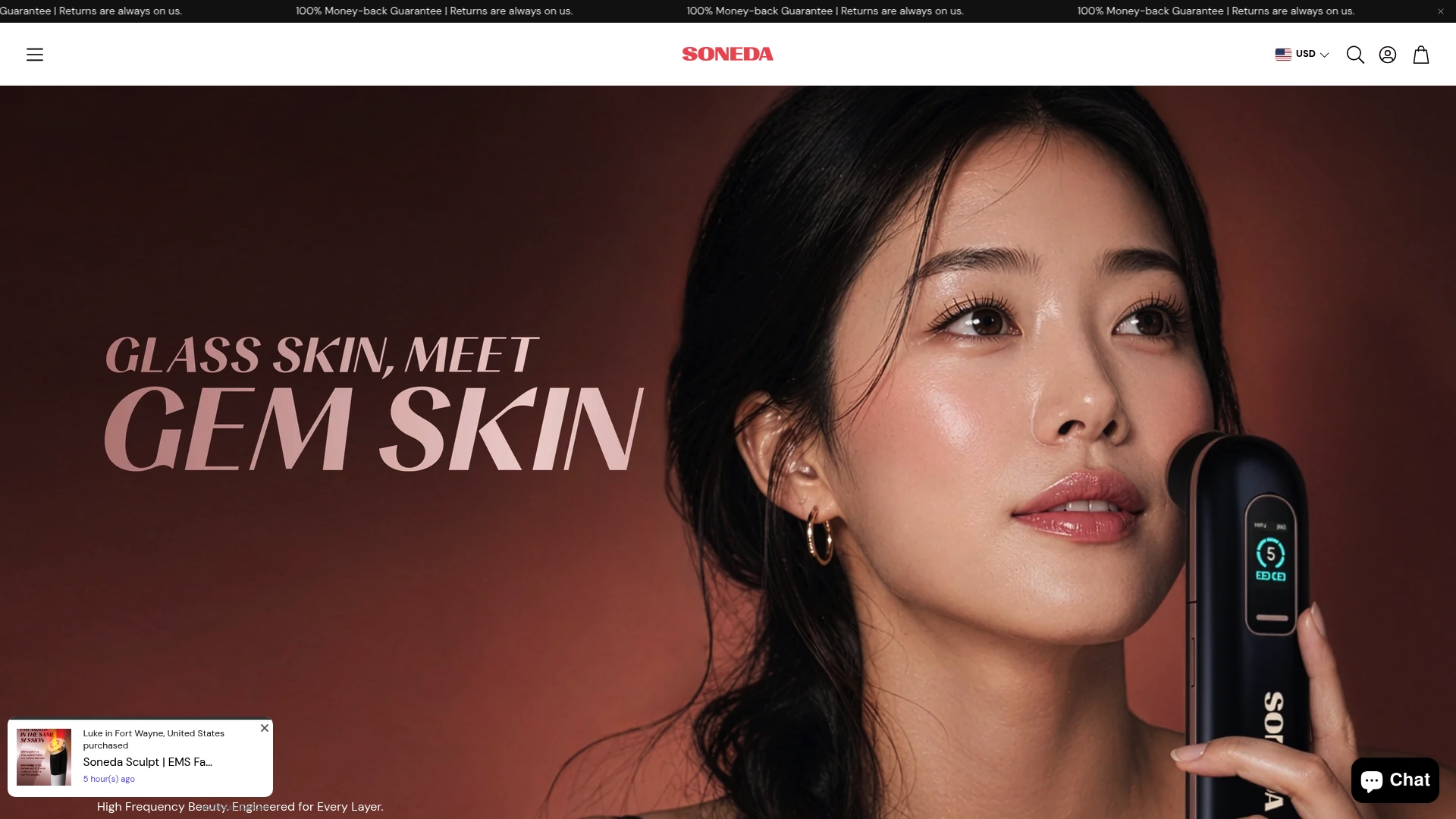
The VividLift is designed for adults with mild-to-moderate laxity who want professional-grade collagen stimulation without clinic visits. It is not a microcurrent device or an LED wand. It is a HIFU-class tool with a structured protocol, which means results build over weeks, not days.
Sonedaskincare supports every purchase with a 100% Money-back Guarantee, a full VividLift protocol guide, and structured skin sequences for specific concerns. Read the contraindications before starting. Results vary based on skin laxity, age, and consistency of use. Ready to try it? Preorder the VividLift or explore the full product details to find the right option for your skin.
Sources
The evidence base for home facial rejuvenation devices is growing but still limited by small sample sizes and short follow-up periods. When evaluating any new device, look for randomized controlled trials with at least 12 weeks of follow-up and objective outcome measures.
- Development of Home Beauty Devices for Facial Rejuvenation: Establishment of Efficacy Evaluation System - PMC
- Can You Give Yourself an At-Home Face-Lift? - The New York Times
- 510(k) clearances - FDA
- Saggy Skin: Why You Have It and What to Do About It - AAD
- 6 Best Facelifting Devices We Tested for Sculpted Jaw and Cheekbones | Glamour
- Saggy Skin: Why You Have It and What to Do About It - Healthline
This article is for general informational purposes only and is not a substitute for professional medical or dermatological advice. Consult a board-certified dermatologist before beginning any energy-based device routine, particularly if you have underlying skin conditions or health concerns.