

Posted by Soneda Skincare Team
on July 25, 2026

HIFU and radiofrequency are both FDA-cleared, non-invasive treatments that stimulate collagen production, but they work at very different depths and suit different skin concerns. If you are deciding between the two, here is the short answer: HIFU is the stronger choice for structural lifting of the jawline, neck, and brow, while RF excels at surface firmness and texture refinement. Many clinical protocols now use both in sequence, with HIFU targeting deeper layers first and RF refining the surface afterward.
Quick comparison at a glance:
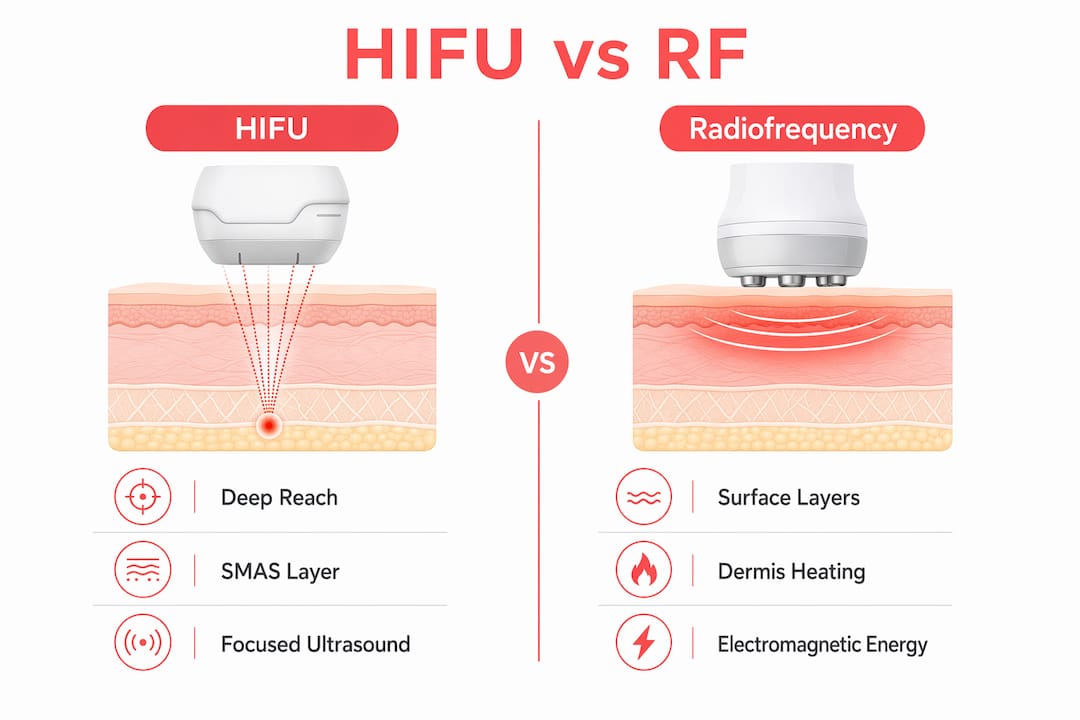
- Depth targeted: HIFU reaches the SMAS layer deeply; RF heats the dermis at shallower depths
- Best for: HIFU for jowl lifting, neck tightening, brow elevation; RF for skin texture, mild laxity, pore refinement
- Sessions needed: HIFU delivers visible results in 1–3 sessions; RF typically requires a series over several weeks for gradual firming
- Results onset: HIFU improvements often appear within weeks and peak around a few months; RF results build gradually over several months
- Downtime: Minimal for both; HIFU may cause temporary tenderness, RF typically causes mild warmth
- Skin type suitability: RF is safe across all skin tones including darker complexions; HIFU requires more caution with certain pigmentation types
- Cost range (US): Professional HIFU sessions run higher per visit; RF sessions are generally lower per visit but require more of them
- At-home option: Devices like the Sonedaskincare VividLift™ combine HIFU and sonophoresis for clinically proven results at home
Table of Contents
- How HIFU works to lift and tighten skin
- How radiofrequency skin treatment tightens and firms
- Core differences between HIFU and RF skin tightening
- When will you actually see results from HIFU or RF?
- Safety, side effects, and who should avoid these treatments
- What do HIFU and RF treatments cost in the United States?
- The Sonedaskincare VividLift™ brings both technologies home
- Sonedaskincare VividLift™: professional results without the clinic price
- Key Takeaways
How HIFU works to lift and tighten skin
High-Intensity Focused Ultrasound, or HIFU, delivers concentrated ultrasound energy to precise depths below the skin’s surface without cutting or disrupting the outer layer. The technology targets the superficial muscular aponeurotic system, known as the SMAS, at depths of up to 5mm. That is the same structural layer a surgeon addresses during a facelift, which is why HIFU is often described as a non-surgical alternative for meaningful lifting.
The mechanism is thermal coagulation. Focused ultrasound creates tiny zones of controlled heat at the target depth, triggering the body’s wound-healing response. Collagen contracts immediately, and over the following weeks, new collagen and elastin fibers form. The result is a gradual but genuine structural lift, particularly along the jawline, under the chin, and across the brow.
What to expect during a HIFU session:
- Sessions typically run from half an hour up to an hour and a half depending on the treatment area
- Most people feel a warm, prickling sensation as the energy pulses are delivered
- No anesthesia is required, though some providers offer topical numbing for comfort
- You can return to normal activities immediately after treatment
- Mild redness or slight swelling may appear for a few hours post-session
Pro Tip: Practitioner skill matters enormously with HIFU. Precise probe placement and correct depth selection determine both safety and results. Always confirm your provider uses real-time ultrasound imaging to guide treatment, especially near the jaw and neck.
For a deeper look at HIFU technology and protocols, Sonedaskincare’s resource library covers the science in plain language.
How radiofrequency skin treatment tightens and firms
Radiofrequency skin treatment uses electromagnetic energy to heat the dermis, the layer sitting just below the epidermis, to a controlled temperature that triggers collagen contraction and remodeling. Where HIFU goes deep, RF works in the 0.5–2mm range, making it ideal for surface-level firmness, texture improvement, and mild laxity rather than structural repositioning.
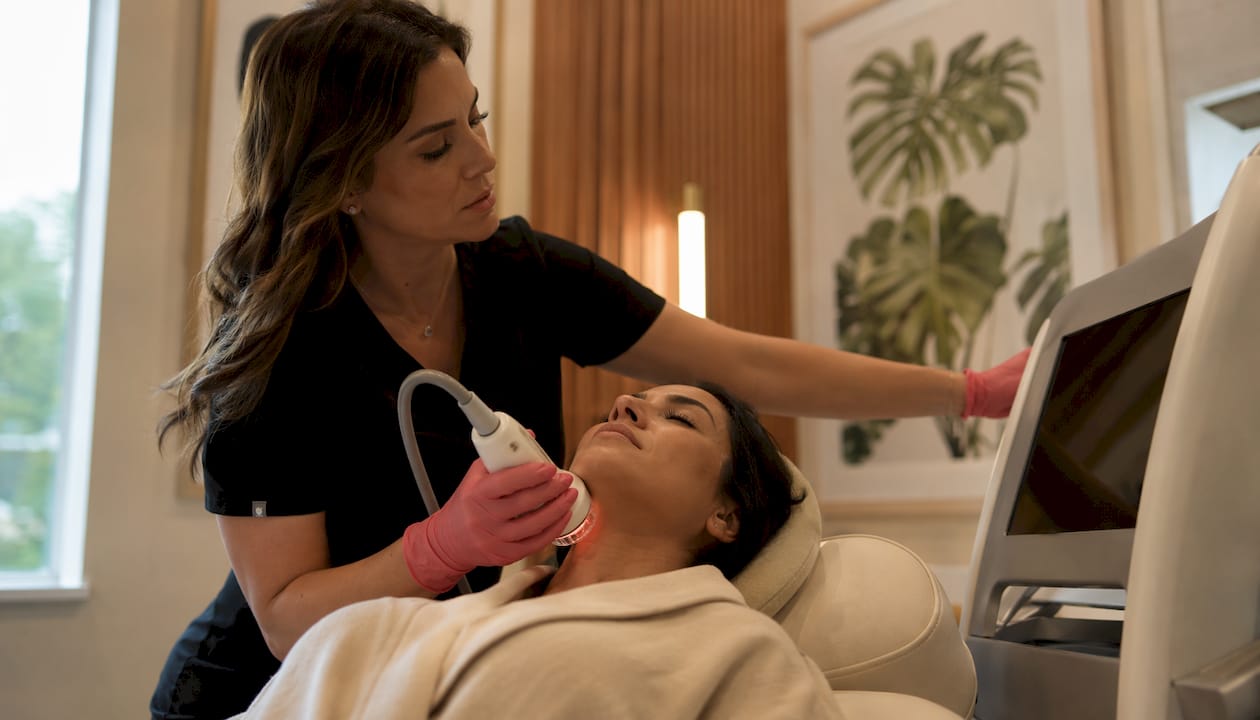
The heating is gentler and more diffuse than HIFU. RF energy warms a broader area of tissue, causing existing collagen fibers to contract while stimulating the production of new ones over time. Because the energy delivery is less concentrated, RF is generally more comfortable during treatment and carries a lower risk of post-procedure tenderness.
Key characteristics of RF skin tightening:
- Works best for mild to moderate skin laxity, enlarged pores, and surface texture concerns
- Multiple sessions over several weeks are standard for optimal results
- Each session duration is generally from twenty to forty-five minutes
- The sensation is often described as a warm massage, with no significant discomfort
- Safe and effective across all skin tones, including darker complexions where high-energy ultrasound requires more caution
- Minimal downtime; mild redness resolves within hours
RF’s popularity in med spas continues to grow. RF technology’s dominance in 2026 treatment menus reflects both its versatility and its consistent patient satisfaction across skin types.
Pro Tip: RF results compound over time. A series of 4–6 sessions spaced 2–4 weeks apart, followed by maintenance treatments every 6–12 months, produces noticeably better long-term outcomes than a single session.
Core differences between HIFU and RF skin tightening
Both technologies stimulate collagen, but the clinical experience, depth of action, and ideal use cases are distinct enough that choosing the wrong one for your skin concern means leaving results on the table. A clinical comparison of RF and focused ultrasound found that the ultrasound group showed superior efficacy in the mid-face and lower face at the one-month mark, while RF results continued to develop through the three-month follow-up, suggesting each technology has a distinct performance curve.
| Factor | HIFU | Radiofrequency (RF) |
|---|---|---|
| Depth of skin targeting | Up to 5mm, reaching the SMAS layer | 0.5–2mm, heating the dermis |
| Type of skin concerns treated | Jawline sagging, neck laxity, brow lift, deep wrinkles | Surface firmness, mild laxity, pore size, texture |
| Typical treatment experience | Warm prickling, moderate sensation, 30–60 min | Warm massage sensation, comfortable, 20–40 min |
| Results onset and duration | Visible in weeks, peak at 2–3 months, lasts 12–24 months | Gradual over 3–6 months, maintenance every 6–12 months |
| Safety profile and side effects | Temporary tenderness, redness; deeper energy requires precision | Mild warmth, minimal redness; very low risk profile |
| Cost range in the US | Higher per session; fewer sessions needed | Lower per session; more sessions required |
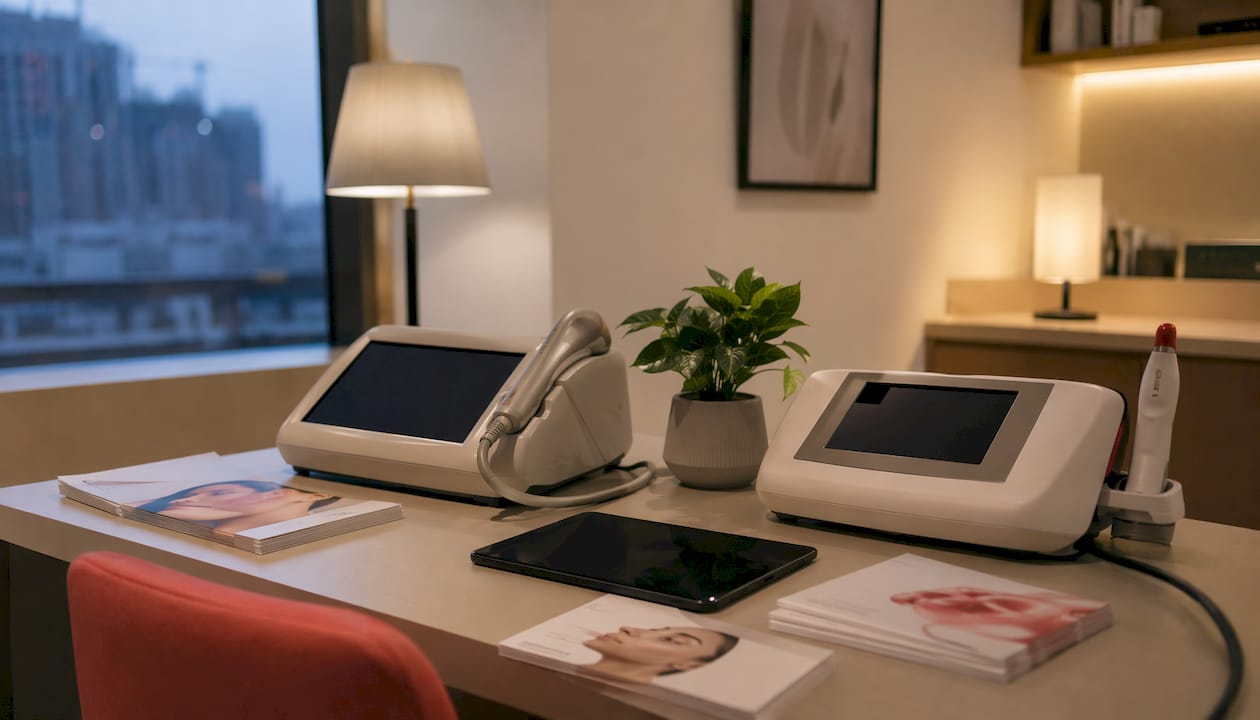
The layered approach, starting with HIFU for deep structural lifting and following with RF for surface refinement, is supported by clinical research on combined protocols. Neither treatment replaces a surgical facelift for advanced laxity, but together they address a wide range of non-surgical rejuvenation goals. The right choice depends on your skin condition, your tolerance, and what you want to achieve.
When will you actually see results from HIFU or RF?
Setting realistic expectations is half the battle with non-invasive skin tightening. Both treatments work through biological processes that take time, and the timelines differ in ways that matter for planning.
-
Immediately after HIFU: Some people notice a subtle tightening effect right away as collagen contracts from the heat. This is real but modest compared to what follows.
-
Weeks 2–4 post-HIFU: The collagen remodeling process accelerates. Skin begins to feel firmer, and early lifting becomes visible, particularly along the jawline and under the chin.
-
Months 2–3 post-HIFU: Peak results typically appear here. Clinical data shows that focused ultrasound patients often perceive optimal efficacy at the one-month mark, with continued improvement through month three.
-
Months 12–24 post-HIFU: Results from a single HIFU session can last up to 18–24 months, though this varies by age, skin condition, and lifestyle. A follow-up session is typically recommended at the 12–18 month mark.
-
After your first RF session: Most people notice mild improvement within 2–4 weeks, but a single session rarely produces dramatic change. RF is a cumulative treatment.
-
After a full RF series (4–6 sessions): Visible firmness and texture improvement become clear around the 3–6 month mark. In a clinical study, 57.1% of RF patients reported the treatment was most effective at three months post-treatment.
-
RF maintenance phase: Without follow-up sessions every 6–12 months, RF results gradually diminish as natural collagen loss continues. Consistency is what separates good RF outcomes from great ones.
Safety, side effects, and who should avoid these treatments
Both HIFU and RF are FDA-cleared, well-tolerated procedures with mild to moderate side effects that resolve quickly. Neither requires surgery, anesthesia, or extended recovery. That said, they are not risk-free, and certain individuals should approach them with caution or avoid them entirely.
HIFU side effects and safety notes:
- Temporary redness, mild swelling, and tenderness at the treatment site are common, particularly along the jaw and neck
- Some people experience a tingling or numb sensation for a few days post-treatment
- In the clinical study referenced above, 40% of focused ultrasound patients reported bilateral jaw or cheekbone tenderness, which resolved within 3–30 days
- Rare cases of superficial skin damage have been reported when probes are misaligned; real-time imaging guidance significantly reduces this risk
- Avoid treatment directly over the thyroid gland, active implants, or areas with compromised nerve pathways
RF side effects and safety notes:
- RF typically causes mild warmth and transient redness that resolves within hours
- Discomfort is generally low; the mean pain score in clinical studies was 4.62 out of 10, comparable to HIFU’s 4.20
- No cases of scarring or pigmentation changes were reported in comparative clinical trials
Who should avoid or consult a physician before treatment:
- Pregnant individuals
- Those with active skin infections, open wounds, or inflammatory skin conditions in the treatment area
- People with metal implants, pacemakers, or cochlear implants (particularly relevant for RF)
- Individuals with a history of keloid scarring
- Those with very thin skin or significant active acne in the target zone
Post-treatment care is straightforward: avoid direct sun exposure, apply SPF 30 or higher daily, skip aggressive exfoliants for 48–72 hours, and stay well hydrated. Both treatments pair well with anti-aging collagen support protocols to extend and enhance results.
What do HIFU and RF treatments cost in the United States?
Cost is one of the most practical factors in choosing between these treatments, and the US market shows significant variation based on geography, provider credentials, and the device used.
| Treatment | Per-Session Cost (US) | Typical Sessions Needed | Estimated Total Investment |
|---|---|---|---|
| Professional HIFU | Higher per session | 1–3 sessions | Higher upfront, lower long-term |
| Professional RF | Lower per session | 4–6 sessions (plus maintenance) | Lower per visit, higher cumulative |
| At-home HIFU device | One-time device cost | Ongoing home use | Most cost-effective long-term |
A few factors drive price variation across the US market:
- Geographic location: Major metro areas like New York, Los Angeles, and Miami typically charge more than mid-size cities
- Provider type: Medical spas, dermatology offices, and plastic surgery practices each have different pricing structures
- Device technology: Newer platforms with real-time imaging or multi-polar RF capability command premium pricing
- Treatment area: Full face and neck treatments cost more than targeted zone treatments
The at-home device category has changed the cost equation significantly. A professional-grade device used consistently at home can deliver clinically meaningful results at a fraction of the cumulative cost of in-office sessions. For those committed to long-term skin health, the math often favors a quality at-home device over repeated clinic visits.
The Sonedaskincare VividLift™ brings both technologies home
The VividLift™ 2-in-1 HIFU+Sono device from Sonedaskincare is built on the same Korean professional-grade technology used in clinical settings, adapted for safe and effective home use. It combines High-Intensity Focused Ultrasound with advanced sonophoresis, a technology that uses ultrasonic waves to drive active skincare ingredients deeper into the skin than topical application alone can achieve.
What the VividLift™ delivers:
- HIFU energy targeting collagen layers for lifting and firming
- Sonophoresis for dramatically enhanced product absorption and hydration
- Clinically proven 175% increase in skin hydration in tested users
- 100% user satisfaction rate in clinical testing
- Comfortable treatment experience designed for home use without professional supervision
- Tested and certified by the Korea Institute of Dermatological Sciences
Clinically Proven: The combination of HIFU and sonophoresis in the VividLift™ produced a 96.4% improvement on an aesthetic scale in clinical research on combined HIFU and RF protocols, with measurable gains in pore size, elasticity, wrinkle depth, and moisturization.
The sonophoresis function addresses one of the biggest gaps in at-home skincare: most topical serums and moisturizers penetrate only the outermost skin layers. By pairing HIFU’s collagen-stimulating energy with sonophoresis-driven ingredient delivery, the VividLift™ works on both structural lifting and surface hydration in a single session.
Pro Tip: Use the VividLift™ with a high-quality hyaluronic acid serum during the sonophoresis phase. The ultrasonic delivery mechanism pushes active ingredients significantly deeper than manual application, amplifying both hydration and the collagen-boosting effect.
For those who want to understand the full science behind the device, Sonedaskincare’s protocol guides walk through each treatment sequence step by step.
Sonedaskincare VividLift™: professional results without the clinic price
If you have been weighing in-office HIFU versus RF treatments and wondering whether the investment makes sense long-term, the VividLift™ offers a clinically validated third path.
Professional HIFU sessions and RF series add up fast, especially when you factor in maintenance visits. The VividLift™ gives you the same core technology, HIFU for deep collagen stimulation and sonophoresis for enhanced hydration, in a device you use at home on your schedule. No appointments. No per-session fees. No waiting rooms.
Sonedaskincare backs every device with a 100% Money-back Guarantee and clinical results you can verify. The 175% hydration improvement and 100% user satisfaction rate are not marketing claims; they come from independent dermatological testing. For anyone serious about non-invasive skin tightening without the recurring clinic cost, the VividLift™ device is the place to start. Explore the full device details and preorder options at Sonedaskincare’s VividLift page.
Key Takeaways
HIFU reaches deeper structural layers for genuine lifting while RF refines surface firmness, and combining both technologies produces the most complete non-invasive rejuvenation results available without surgery.
| Point | Details |
|---|---|
| Depth determines the right treatment | HIFU targets up to 5mm for structural lifting; RF works at 0.5–2mm for surface firmness and texture. |
| Results timelines differ significantly | HIFU peaks at 2–3 months and lasts up to 18–24 months; RF builds over 3–6 months and needs maintenance every 6–12 months. |
| RF suits all skin tones | RF is safe across all complexions, including darker skin tones where high-energy ultrasound requires more caution. |
| Combined protocols outperform either alone | Clinical research shows a 96.4% aesthetic improvement score when HIFU and RF are used together in sequence. |
| Sonedaskincare VividLift™ combines both | The VividLift™ delivers HIFU and sonophoresis at home with a clinically proven 175% increase in skin hydration and 100% user satisfaction. |


