

Posted by Soneda Skincare Team
on July 04, 2026

Collagen is defined as the structural protein that gives skin its firmness, elasticity, and thickness. Learning how to stimulate collagen production in skin is one of the most evidence-backed ways to reduce wrinkles, restore facial volume, and improve skin elasticity over time. Fibroblasts are the cells responsible for producing collagen, and they respond to specific signals: controlled stress, targeted ingredients, and key nutrients. Retinoids, vitamin C, hydrolyzed collagen supplements, and SPF 30+ sun protection are the four pillars that dermatologists consistently recommend. The good news is that most of these methods are accessible, affordable, and proven to work when applied consistently.
What topical skincare ingredients effectively stimulate collagen production?
Retinoids are the gold standard for topical collagen stimulation. They directly activate fibroblasts and block the enzymes that break collagen down. This dual action makes retinoids more effective than almost any other topical ingredient on the market. Prescription-strength cretinoid delivers the strongest results, while over-the-counter retinol offers a gentler entry point for people with sensitive skin.
Vitamin C is the second non-negotiable ingredient in any collagen-focused routine. It acts as a required cofactor in the collagen synthesis process, meaning your skin cannot build new collagen without it. Vitamin C also neutralizes free radicals from UV exposure, which would otherwise degrade existing collagen. Look for L-ascorbic acid formulas at 10–20% concentration for measurable results.

Peptides are short chains of amino acids that signal fibroblasts to produce more collagen. They work differently from retinoids: instead of stressing the skin, they send a chemical message that mimics the breakdown of existing collagen. This makes peptides a good option for people who cannot tolerate retinoids. Palmitoyl pentapeptide-4 (Matrixyl) is one of the most studied peptide complexes in this category.
One common misconception deserves direct correction. Topical collagen serums do not build new collagen. The collagen molecule is too large to penetrate the skin barrier, so it sits on the surface and provides temporary hydration at best. Ingredients that stimulate your skin’s own fibroblasts are the only topical approach that actually increases collagen levels.
- Retinoids: Start with retinol 2–3 nights per week. Increase frequency as your skin adjusts. Tretinoin requires a prescription.
- Vitamin C: Apply in the morning before sunscreen. Stable L-ascorbic acid formulas in opaque packaging last longer.
- Peptides: Layer under moisturizer. They pair well with retinoids and vitamin C without causing irritation.
- Medical-grade formulas: Medical-grade skincare uses more stable, potent concentrations that penetrate deeper than most OTC products. They create measurable collagen increases that drugstore alternatives often cannot match.
Pro Tip: Never apply retinoids and vitamin C in the same step. Use vitamin C in the morning and retinoids at night to avoid irritation and maximize the benefit of each ingredient.
How does nutrition support natural collagen production in the skin?
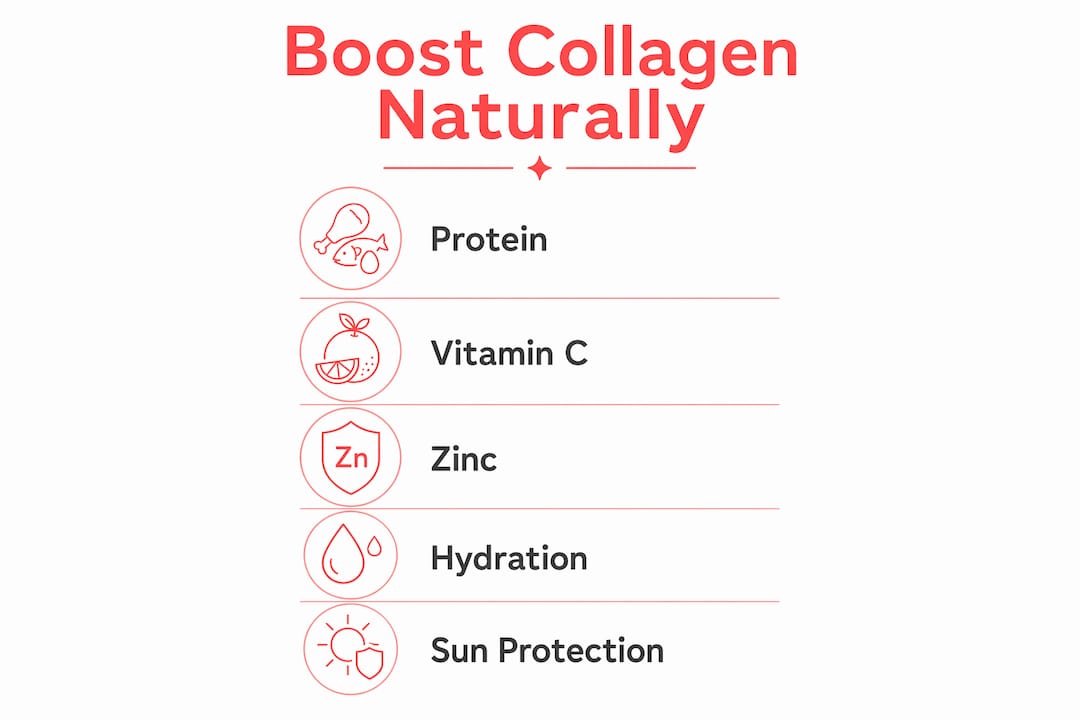
Nutrition supplies the raw materials your body needs to build collagen. Without adequate protein, vitamin C, zinc, and copper, fibroblasts cannot complete the collagen synthesis process regardless of what you apply topically. Think of these nutrients as the bricks and mortar. Your skincare routine is the blueprint, but nutrition is the construction crew.
Hydrolyzed collagen supplements have the strongest evidence base among oral options. Medical experts recommend 2.5–10 grams daily of hydrolyzed collagen (Types I and III) for skin health, with consistent use over several months required for visible results. A 12-week clinical study found that daily supplementation with fish collagen peptides improved skin hydration, thickness, and reduced wrinkles in women aged 55–65. That study used dosages between 5.5 and 11 grams per day across 198 participants.
Here are the top dietary strategies to increase collagen in skin:
- Eat protein at every meal. Collagen is a protein, and your body needs amino acids like glycine, proline, and hydroxyproline to build it. Chicken, fish, eggs, and legumes are strong sources.
- Add bone broth or fish to your weekly routine. Both are naturally rich in collagen precursors and easy to incorporate into everyday meals.
- Prioritize vitamin C-rich foods. Bell peppers, citrus fruits, strawberries, and broccoli all supply the vitamin C your body needs to complete collagen synthesis.
- Include zinc and copper sources. Pumpkin seeds, cashews, shellfish, and dark chocolate provide these trace minerals, which act as cofactors in collagen formation.
- Eat leafy greens daily. Spinach, kale, and Swiss chard contain chlorophyll, which some research suggests may increase collagen precursors in the skin.
- Stay hydrated. Dehydration reduces skin elasticity and slows cellular repair. Aim for at least eight cups of water daily.
Pro Tip: Take your collagen supplement with a vitamin C-rich food or drink. Vitamin C is required for collagen synthesis, and pairing the two improves absorption and effectiveness.
Which professional or at-home treatments best stimulate collagen regeneration?
The body produces collagen in response to controlled stress or damage. This principle is the foundation of the most effective professional treatments available today. When the skin detects injury, it triggers a repair cascade that includes fibroblast activation and new collagen formation. Dermatologists use this mechanism deliberately.
- Microneedling: Tiny needles create micro-injuries in the dermis, triggering the skin’s natural repair response. Results improve with a series of treatments spaced 4–6 weeks apart. At-home dermarollers exist but deliver shallower penetration than professional devices.
- Radiofrequency microneedling: This combines physical injury with heat energy. Radiofrequency microneedling promotes deeper remodeling and skin tightening by activating collagen production at multiple skin depths simultaneously. It is one of the most effective in-office procedures for skin laxity.
- High-Intensity Focused Ultrasound (HIFU): HIFU delivers focused ultrasound energy to the deep dermis and the SMAS layer beneath it. This thermal energy triggers collagen remodeling without breaking the skin surface. It is the same technology used in professional lifting treatments, now available in at-home devices.
- Laser therapies: Fractional lasers like Fraxel create controlled micro-damage across the skin surface, stimulating collagen repair. Results are significant but require downtime and professional administration.
- Biostimulatory injectables: Certain injectable treatments work by stimulating your own fibroblasts to produce collagen over time, rather than simply filling volume. These require a licensed provider and deliver gradual, natural-looking results.
Sonedaskincare’s VividLift device brings HIFU and sonophoresis technology into the home setting. Sonophoresis uses ultrasound waves to drive active skincare ingredients deeper into the skin, amplifying the effect of topical collagen-support serums. This combination addresses both collagen remodeling and ingredient delivery in a single device. For people who want professional-level results without repeated clinic visits, this category of home technology represents a practical, consistent option.
Pro Tip: Consistency matters more than intensity. One professional treatment per year with no follow-up at home produces far less improvement than a steady at-home routine combined with periodic in-office sessions.
What lifestyle habits help preserve and boost skin collagen?
Lifestyle choices either protect or destroy the collagen you already have. No topical routine or supplement can outpace the damage caused by chronic UV exposure, poor sleep, or smoking. These habits work in the background every day, either supporting or undermining your skin’s collagen levels.
- Wear SPF 30+ daily. UV radiation is the single largest external cause of collagen breakdown. Sun protection at SPF 30 or higher is non-negotiable if you want to preserve the gains from any collagen-boosting treatment. Apply it every morning, even on cloudy days.
- Prioritize sleep. Skin repairs itself during deep sleep. Growth hormone, which peaks at night, drives collagen synthesis and cellular regeneration. Aim for 7–9 hours consistently.
- Manage stress actively. Chronic stress elevates cortisol, which suppresses collagen production and accelerates skin aging. Regular exercise, meditation, and adequate rest all reduce cortisol levels.
- Quit smoking. Smoking constricts blood vessels in the skin, reducing oxygen and nutrient delivery to fibroblasts. It also directly degrades collagen through oxidative stress.
- Limit alcohol. Excess alcohol dehydrates the skin and generates free radicals that damage collagen fibers. Moderate consumption is far less harmful than regular heavy drinking.
- Exercise regularly. Physical activity improves circulation, delivering more oxygen and nutrients to skin cells. Some research also suggests that exercise reduces systemic inflammation, which protects collagen from breakdown.
These habits do not replace topical or oral collagen strategies. They protect the collagen you are working to build. Think of SPF, sleep, and stress management as the foundation that makes everything else work better.
Key Takeaways
Stimulating collagen production requires a consistent, multi-layered approach combining topical ingredients, nutritional support, professional treatments, and protective lifestyle habits.
| Point | Details |
|---|---|
| Retinoids are the top topical option | They activate fibroblasts and block collagen-degrading enzymes, making them the most effective topical ingredient. |
| Hydrolyzed collagen supplements work | Clinical evidence supports 2.5–10g daily of Types I and III collagen for measurable skin improvements over months. |
| Controlled stress triggers collagen | Treatments like microneedling, HIFU, and radiofrequency microneedling work by activating the skin’s repair response. |
| SPF 30+ is non-negotiable | UV radiation breaks down collagen faster than any treatment can rebuild it without daily sun protection. |
| Consistency over months is required | Visible collagen improvements take 3–6 months of sustained effort across topical, oral, and lifestyle strategies. |
What I’ve learned about collagen after years of watching people chase quick fixes
The most common mistake people make with collagen is expecting results in two weeks. Collagen synthesis is a slow biological process. Visible improvements take months, and many people stop their routine right before results would have appeared. That pattern is the single biggest reason collagen strategies fail.
The second mistake is picking one method and ignoring the others. I have seen people spend hundreds of dollars on supplements while skipping sunscreen every day. UV damage degrades collagen faster than any supplement can rebuild it. The math simply does not work in their favor.
What actually produces results is a layered approach: retinoids or peptides at night, vitamin C in the morning, a quality hydrolyzed collagen supplement taken daily, SPF every single day, and a professional or home device treatment on a regular schedule. None of these is optional if you want meaningful improvement. Each one addresses a different part of the collagen production and preservation cycle.
The marketing around collagen is also worth scrutinizing. Topical collagen creams are widely sold but cannot penetrate the skin to build new collagen. The molecule is simply too large. Products that claim otherwise are selling hydration, not collagen synthesis. Spend your money on ingredients with actual fibroblast-stimulating evidence: retinoids, vitamin C, peptides, and proven device technologies.
Patience and consistency are not glamorous advice. But they are the only advice that is backed by the biology.
— Customer
Sonedaskincare’s technology for your collagen routine
Sonedaskincare brings professional HIFU and sonophoresis technology into your home with the VividLift™ 2-in-1 HIFU+Sono device. HIFU delivers focused ultrasound energy to the deep dermis, triggering collagen remodeling at the same depth targeted in clinical treatments. Sonophoresis then drives active skincare ingredients deeper into the skin, amplifying the results of your topical routine.

Sonedaskincare reports a 100% user satisfaction rate and clinical results showing a 175% increase in skin hydration. The device is tested by the Korea Institute of Dermatological Sciences and designed for consistent at-home use. If you are ready to add a clinically grounded device to your collagen-boosting routine, explore the VividLift device and see how it fits your skincare goals. You can also review how it works to understand the technology before committing.
FAQ
What is the fastest way to boost collagen in skin?
Retinoids and professional treatments like microneedling or HIFU produce the fastest measurable results, but even these require consistent use over 3–6 months for visible improvement.
Do collagen supplements actually work for skin?
Yes. Clinical studies support daily intake of 2.5–10 grams of hydrolyzed collagen (Types I and III) for improvements in skin hydration, thickness, and wrinkle reduction when taken consistently over several months.
Can you restore collagen in the face at home?
Home devices using HIFU or radiofrequency technology can stimulate collagen remodeling in the face. Paired with retinoids and daily SPF, at-home routines produce real improvements without clinic visits.
Why does topical collagen cream not work?
Collagen molecules are too large to penetrate the skin barrier. Topical collagen products provide surface hydration only. Ingredients like retinoids and peptides are needed to stimulate fibroblasts and build new collagen from within.
How long does it take to see results from collagen-boosting treatments?
Visible collagen improvements typically take 3–6 months of consistent effort. Many people stop prematurely before results appear, which is the most common reason collagen strategies appear not to work.


