RF EMS LED Light Therapy Facial Device: 2026 Guide

An RF EMS LED light therapy facial device brings together three clinically validated technologies in one handheld tool: radio frequency (RF) for deep collagen stimulation, electrical muscle stimulation (EMS) for facial toning, and LED light therapy for targeted skin renewal. Together, they address the full spectrum of aging concerns, from fine lines and sagging to acne and uneven tone, without a clinic visit.
Here is what this combination delivers for your skin:
- Collagen stimulation: RF heats the deeper dermal layers to trigger new collagen and elastin production
- Skin tightening: Both RF and EMS work on laxity, firming the face and neck over time
- Muscle toning: EMS microcurrent lifts and contours by stimulating the underlying facial muscles
- Wrinkle reduction: Consistent LED and RF treatments visibly smooth fine lines
- Acne control: Blue LED light targets acne-causing bacteria at the source
- Improved elasticity: Regular use supports firmer, more resilient skin texture
- Enhanced product absorption: Many devices include vibration or warming modes that help serums penetrate deeper
The face and neck are the primary treatment areas, though many devices extend to the décolletage.
How do RF, EMS, and LED light therapy work together?
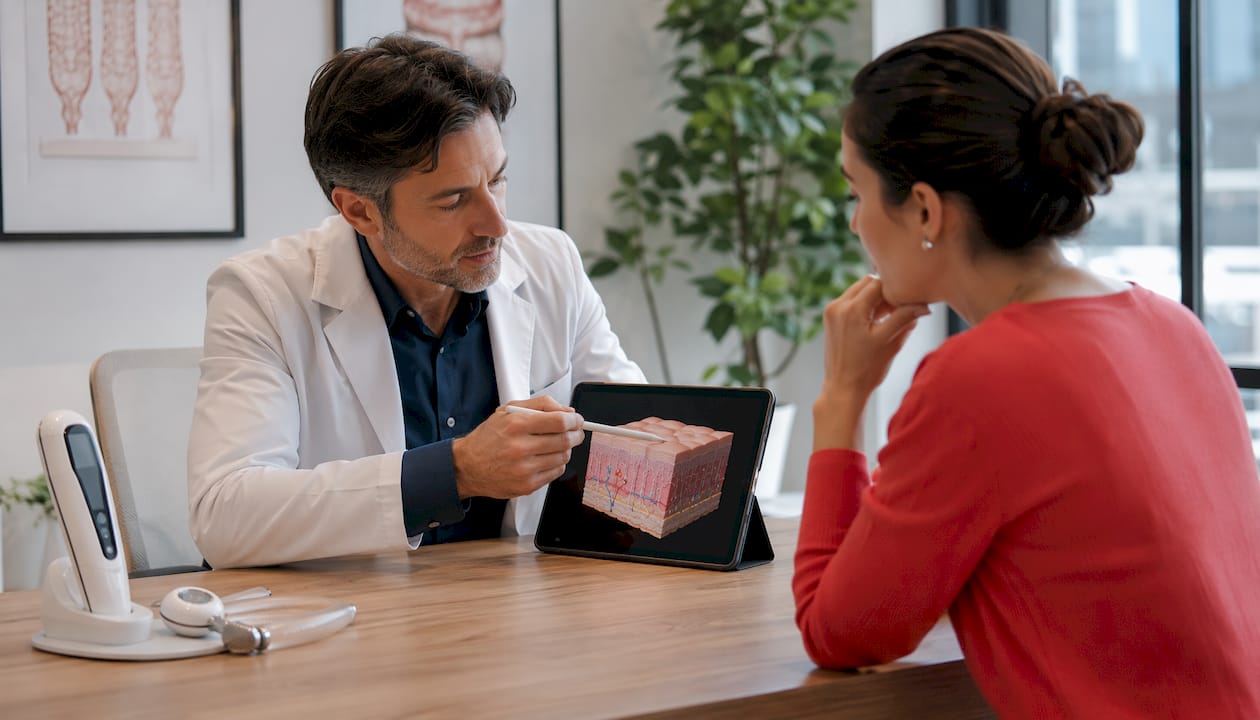
Each technology targets a different layer of the skin, which is exactly why the combination outperforms any single modality on its own.
Radio frequency (RF)
RF energy penetrates the dermis and heats tissue to approximately 43°C, the temperature clinically recognized as optimal for collagen remodeling. At that temperature, existing collagen fibers contract and fibroblasts are triggered to produce new collagen and elastin. The result is visibly tighter, plumper skin over a course of treatments. Quality at-home RF devices use temperature sensors to maintain that threshold safely, automatically adjusting output so the skin never overheats.
Electrical muscle stimulation (EMS)
EMS delivers low-level electrical pulses that mimic the body’s natural nerve signals, causing facial muscles to contract and relax. Home-use EMS has been shown to enhance facial elasticity, reduce sagging, and improve contour with no harmful side effects when used as directed. Think of it as a passive workout for the muscles beneath your skin. Over weeks, the repeated stimulation lifts and defines the jawline, cheeks, and brow area.
LED light therapy wavelengths
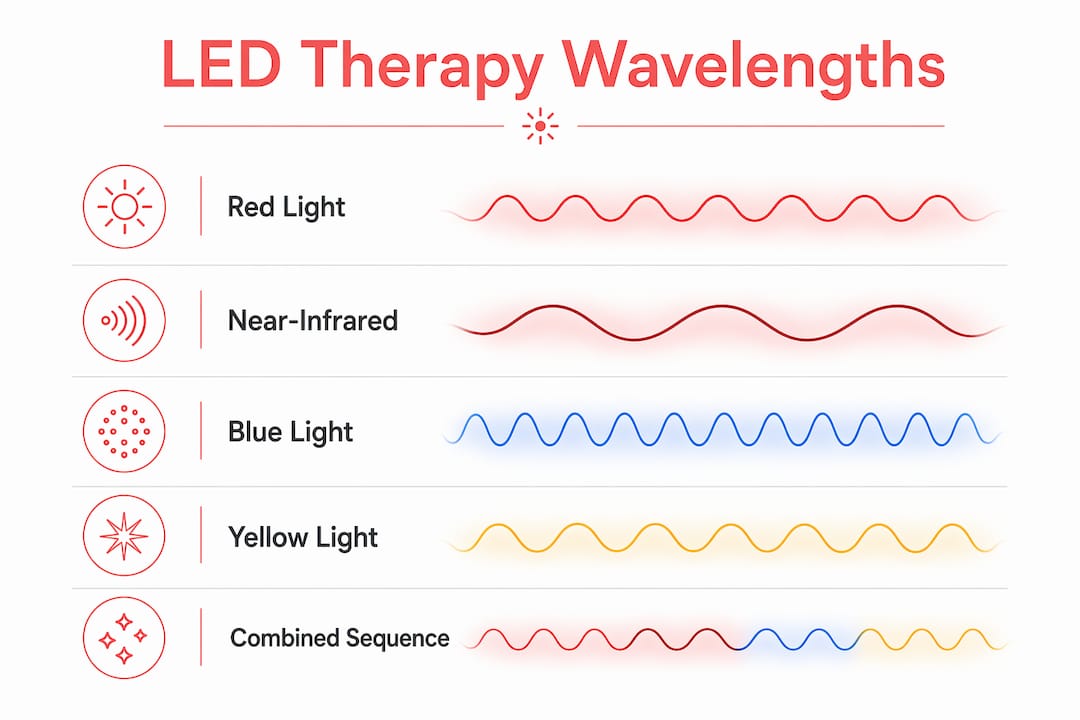
LED therapy works at a cellular level, with each wavelength targeting a specific depth and concern. The table below maps the three core wavelengths to their clinical targets:
| Wavelength | Color | Primary Target | Penetration Depth |
|---|---|---|---|
| 620–633nm | Red | Collagen production, anti-aging | Epidermis to upper dermis |
| 415–465nm | Blue | Acne-causing bacteria | Surface to upper epidermis |
| 830–1072nm | Near-infrared | Deep tissue firming, elastin | Mid to deep dermis |
Key technology features to look for in a quality device:
- Adjustable intensity levels for both RF and EMS (typically 3–5 settings)
- Multiple LED modes so you can switch between anti-aging and acne treatments
- Temperature regulation built into the RF circuit for safe home use
- Ergonomic, handheld design for easy self-treatment on the face and neck
- Rechargeable battery with USB-C charging for portability
When all three technologies run in sequence or simultaneously, the skin receives heat, muscle activation, and light stimulation in a single session. That layered approach accelerates visible results compared to using each tool separately.
What should you look for when choosing a device?
Not every device on the market delivers what it promises. Here is how to separate clinically effective tools from marketing noise.
FDA clearance and clinically proven wavelengths
FDA clearance is the single most important marker of safety and efficacy for a light-based facial device. It means the device has been reviewed and found safe and effective for its stated use, whether that is wrinkle reduction, acne treatment, or both. Clinicians consistently emphasize selecting devices with FDA clearance and clinically proven wavelengths to confirm you are getting therapeutic results, not just light exposure.
Many lower-priced devices lack sufficient power output or the specific wavelengths required for a real therapeutic effect. A device that emits light at the wrong nanometer range or too low an irradiance simply will not stimulate collagen or kill acne bacteria, regardless of how it is marketed.
Power output and LED count
Output power and LED count directly affect how much energy reaches your skin per session. Premium LED masks feature over 600 LEDs for full-face coverage, ensuring consistent light delivery across every treatment zone. For handheld devices, check the irradiance rating (measured in mW/cm²) rather than relying on LED count alone.
Price range and value
At-home RF EMS LED devices range from under $100 for basic entry-level tools to $400 and above for medical-grade LED masks and multi-technology handhelds. The price gap usually reflects real differences in LED count, wavelength precision, RF frequency, and clinical validation. A device backed by published clinical data and FDA clearance is worth the premium, since an ineffective device at any price delivers no return.
Pro Tip: Before purchasing, search the brand’s website for a clinical study or FDA clearance number. If neither exists, treat the efficacy claims as unverified marketing.
Maintenance and device longevity
Clean the treatment head after every session with a soft, damp cloth or the manufacturer’s recommended wipe. Avoid submerging devices that are not rated waterproof (look for an IP67 rating if you want that flexibility). Store the device away from direct sunlight to protect the LED bulbs. Most quality devices are built to last several years with proper care, making the per-session cost far lower than clinic appointments.
How to use an RF EMS LED device safely at home
Getting results comes down to consistency and correct technique. Follow these steps for every session:
- Cleanse thoroughly before use. Remove all makeup, SPF, and residue so the device makes direct contact with clean skin.
- Apply a conductive gel or serum if your device uses RF. RF energy requires a medium to travel efficiently into the skin; skipping this step reduces efficacy and can cause discomfort.
- Start on the lowest intensity setting, especially for RF and EMS. Build up gradually over the first two weeks as your skin adapts.
- Move the device slowly over each treatment zone. Spend roughly 3–5 minutes per area (forehead, cheeks, jawline, neck) rather than rushing across the full face.
- Use 3–5 times per week for the first 8 weeks, then drop to a maintenance frequency of 2–3 times per week once results are established.
- Follow the LED session with your regular moisturizer or targeted serum to lock in hydration while the skin is receptive.
Safety precautions and contraindications
RF and EMS devices are not appropriate for everyone. Avoid use if you have:
- A pacemaker or any implanted electronic medical device
- Active skin infections, open wounds, or severe acne cysts in the treatment area
- A history of epilepsy (relevant for EMS stimulation)
- Pregnancy
- Metal implants in the face or neck
Always read the full contraindications list in your device’s manual. If you have a diagnosed skin condition or are under dermatological care, consult your provider before starting home treatments.
Tracking your progress
Take a photo in consistent lighting before your first session, then again at weeks 4 and 8. Skin tightening and fine-line reduction are gradual, and photos make subtle changes visible. 89% of people who used an RF device consistently reported improved skin tightness within 8 weeks. Most people notice improved texture and a subtle lift within the first month; collagen remodeling continues to build for up to 3 months after a full course.
The science behind LED wavelengths and clinical validation
The therapeutic effects of LED light therapy are well documented in photobiomodulation research. Each wavelength interacts with specific chromophores in the skin, triggering biological responses that translate into visible improvements.
Red light at 620–633nm stimulates fibroblasts to produce collagen and accelerates cellular repair. It is the most widely used wavelength for anti-aging applications. Red light at 633nm combined with near-infrared at 830nm is clinically proven to reduce fine lines and firm skin by targeting fibroblast cells deep in the dermis to stimulate new collagen and elastin production.
| Wavelength | Clinical Outcome | Tissue Depth Reached |
|---|---|---|
| 620–633nm (red) | Collagen synthesis, wrinkle reduction, skin repair | Epidermis to upper dermis |
| blue (around 415nm) | Acne bacteria elimination, pore clearing | Epidermis surface layer |
| 830nm (near-infrared) | Elastin production, deep firming, circulation | Mid to deep dermis |
| 830nm near-infrared | Collagen stimulation in hypodermis | Deep dermis to hypodermis |
Clinically Proven: Devices combining red (633nm) and near-infrared (830nm) wavelengths work at a cellular level to stimulate new collagen and reduce fine lines, wrinkles, and other visible signs of aging.
For a device to deliver these outcomes, the wavelengths must be precise and the output power sufficient. Wavelength drift of even 20–30nm can shift the light into a range that no longer activates the target chromophore. This is why FDA-cleared devices with published wavelength specifications are the standard clinicians recommend. You can explore LED device selection criteria in depth to understand how wavelength precision, bulb count, and safety clearance separate effective tools from ineffective ones.
If you are weighing at-home devices against professional spa treatments, the gap in technology has narrowed considerably. Many professional spa platforms now use the same core wavelengths and RF frequencies found in premium home devices, with the primary difference being output power and session duration.
Sonedaskincare’s approach goes a step further. The Soneda Sculpt EMS Facial Toning Device integrates triple-wavelength LED light therapy with EMS toning, bringing clinically validated technology into a single at-home tool designed for real, measurable results.
Key Takeaways
An RF EMS LED light therapy facial device delivers the most clinically validated results when it combines FDA-cleared wavelengths, sufficient power output, and consistent weekly use over at least 8 weeks.
| Point | Details |
|---|---|
| FDA clearance matters | Only devices with FDA clearance have been verified safe and effective for their stated skin concern. |
| Wavelength precision drives results | Red (620–633nm), blue (415–465nm), and near-infrared (830–1072nm) each target distinct skin layers and concerns. |
| RF heats to 43°C for collagen | At-home RF devices heat skin to 43°C, the clinically optimal temperature for collagen remodeling. |
| 89% saw tightening in 8 weeks | Consistent RF use produced improved skin tightness in 89% of people within an 8-week treatment course. |
| Premium devices exceed 600 LEDs | Devices with over 600 LEDs deliver fuller, more even light coverage across the full face. |