Best Devices for Lymphatic Drainage: 2026 Guide

The best device for lymphatic drainage at home is a multi-technology skincare device that combines High-Intensity Focused Ultrasound (HIFU), microcurrent sonophoresis, and LED light therapy. This combination supports lymph flow, boosts collagen, and delivers clinically measurable skin improvements without a clinic visit. Medical-grade pneumatic compression devices handle serious conditions like lymphedema, but they require a physician’s prescription and are not designed for cosmetic home use. For facial lifting, firming, and hydration, advanced Korean skincare technology sets the standard.
Key benefits of the right at-home lymphatic drainage device:
- Improved lymphatic flow and reduced facial puffiness
- Increased collagen production and visible skin lifting
- Enhanced skin hydration and product absorption
- Gentle, safe stimulation without the risks of excessive pressure
- Clinically validated results you can achieve at home
Table of Contents
- What separates medical-grade from at-home lymphatic drainage devices?
- Which technologies actually make at-home lymphatic devices effective?
- How to use lymphatic drainage devices safely in your skincare routine
- The Soneda VividLift™ 2-in-1 HIFU+Sono device: clinically proven Korean technology
- Recommendations to maximize your at-home results
- What makes Sonedaskincare’s technology stand out
- Which device type fits your skin type and goals?
- What do at-home lymphatic drainage devices cost?
- How to choose the right device for your lifestyle
- The Sonedaskincare VividLift™: professional results at home
- Key Takeaways
What separates medical-grade from at-home lymphatic drainage devices?
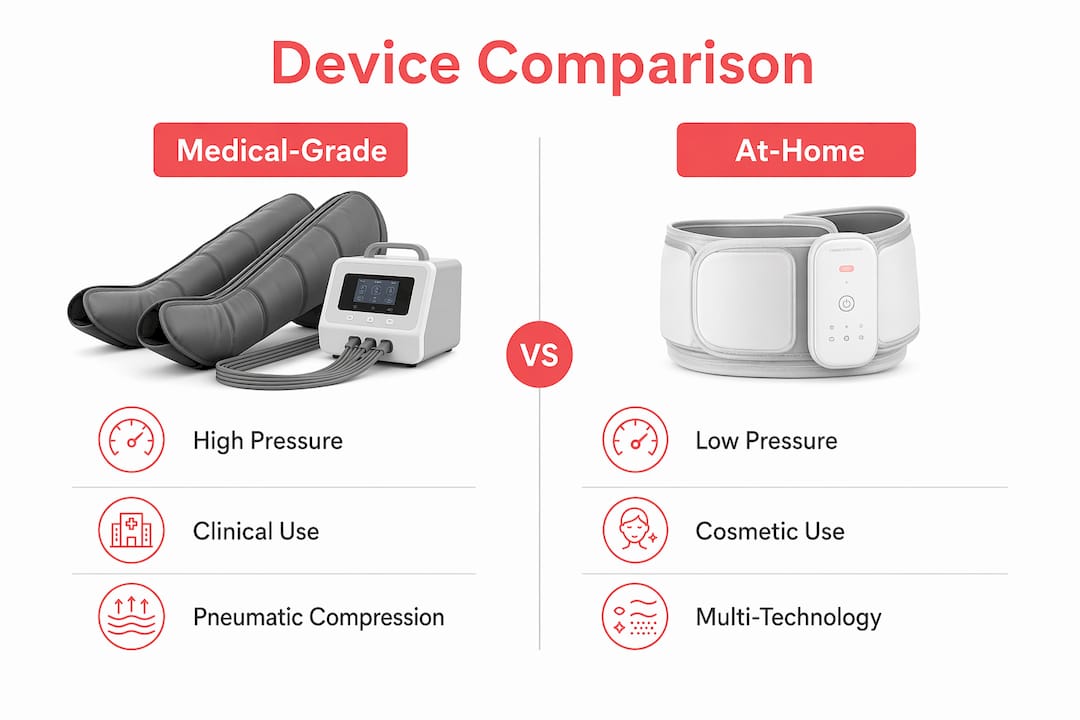
Medical-grade pneumatic compression systems are the clinical standard for diagnosed lymphatic conditions. These devices use multi-chamber systems with adjustable pressures delivering sequential gradient compression to move lymph fluid toward drainage points. They treat lymphedema, chronic venous insufficiency, and post-surgical edema. Using one without physician supervision carries real risk: misuse can cause fluid buildup or damage lymph nodes.
At-home devices are built for cosmetic use. They operate at lower, safer pressure levels and combine multiple technologies to support facial lymphatic drainage without clinical oversight. The cost difference is significant too. Medical systems run into thousands of dollars and require prescriptions; consumer devices are accessible and designed for daily self-care.
Quick comparison:
| Feature | Medical-Grade Devices | At-Home Cosmetic Devices |
|---|---|---|
| Pressure range | — | Low, skin-safe levels |
| Chamber count | — | Varies; often single-head |
| Primary use | Lymphedema, venous insufficiency | Facial lifting, hydration, puffiness |
| Supervision required | Yes, physician-prescribed | No |
| Cost | High (thousands of dollars) | Accessible (around $30–$300) |
Which technologies actually make at-home lymphatic devices effective?
Not every device marketed for lymphatic drainage delivers real results. The ones that do share a specific set of technologies.
HIFU (High-Intensity Focused Ultrasound) penetrates deep skin layers to stimulate collagen synthesis and tighten tissue. This lifting action also encourages fluid movement in the dermis. Microcurrent and sonophoresis use low-level electrical and ultrasonic energy to gently mobilize lymph fluid, improve product absorption, and tone facial muscles. LED and red light therapy has the strongest clinical backing among at-home tools. A 2017 randomized controlled trial showed red light therapy reduced limb circumference and inflammation markers, supporting its role in lymphatic health. You can explore at-home red light therapy devices to see how these technologies compare.
Expert Dr. Halim, a regenerative medicine physician, recommends LED and infrared devices over manual tools for consistent lymphatic support, noting that gentle, rhythmic application with appropriate light therapies is what drives results.
Must-have features in an effective at-home device:
- Multi-technology integration (HIFU + microcurrent + LED)
- Gradient-pressure or guided stroke algorithms
- Ergonomic design for facial contouring
- Adjustable intensity settings for different skin types
- Safety shutoffs and skin-contact sensors
Pro Tip: Devices that combine at least two modalities consistently outperform single-technology tools. If a device only vibrates or only emits light, it is working with one hand tied behind its back.
How to use lymphatic drainage devices safely in your skincare routine
Technique matters as much as the device itself. Strokes must follow anatomical lymphatic pathways toward lymph nodes. Random or heavy pressure strokes are not just ineffective; they can be counterproductive. Pressure must stay light: overly firm strokes collapse delicate lymph vessels and reduce drainage rather than improve it.
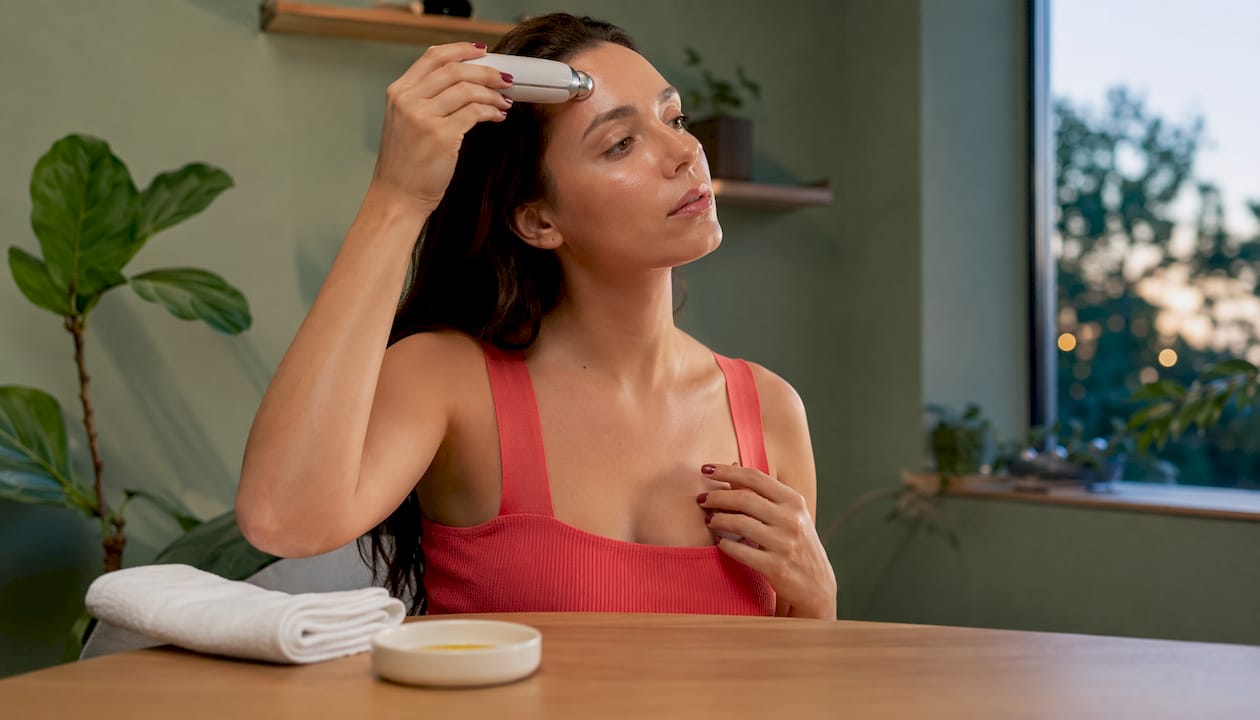
Start each session by gently activating the lymph nodes at your neck and collarbone to open drainage pathways before working on the face. Use slow, rhythmic motions moving fluid downward and outward. Three to five sessions per week is a practical frequency for cosmetic facial use.
Routine steps and safety considerations:
- Begin at the neck and collarbone to prime drainage pathways
- Work upward across the face using light, outward strokes
- Avoid broken skin, active acne, or inflamed areas
- Skip use during pregnancy or if you have active infections, blood clots, or heart conditions
- Clean device heads after every session with a gentle alcohol wipe
- Store devices away from heat and moisture to protect sensors and battery life
Pro Tip: Consistency beats intensity every time. Two minutes of correct technique five days a week produces better results than a 20-minute session once a week with too much pressure.
The Soneda VividLift™ 2-in-1 HIFU+Sono device: clinically proven Korean technology
The Soneda VividLift™ 2-in-1 HIFU+Sono device is built around the same core technologies used in professional aesthetic clinics, engineered for safe, effective home use. It integrates HIFU for deep collagen stimulation and lifting, sonophoresis microcurrent for hydration and gentle lymph mobilization, and multi-wavelength LED therapy for circulation and skin tone. Clinical results show a 175% increase in skin hydration and a 100% user satisfaction rate.
| Feature | VividLift™ 2-in-1 | Typical Single-Tech Device |
|---|---|---|
| Technologies | HIFU + Sonophoresis + LED | One modality |
| Skin hydration increase | 175% (clinically validated) | Not measured |
| User satisfaction | 100% (clinically validated) | Varies |
| Treatment modes | Multiple guided protocols | Single mode |
| Home use design | Yes, guided sequences | Varies |
Top benefits of the VividLift™:
- Visible skin lifting and firming with HIFU
- 175% clinically validated hydration boost
- Gentle lymphatic drainage support via sonophoresis
- Multi-wavelength LED for improved circulation and tone
- Guided at-home protocols for consistent results
Clinically Proven: The VividLift™ 2-in-1 HIFU+Sono device delivers a 175% increase in skin hydration with a 100% user satisfaction rate, validated by clinical testing.
Recommendations to maximize your at-home results
Pair your device sessions with a quality serum or essence applied immediately before sonophoresis mode. The microcurrent drives active ingredients deeper into the skin, amplifying both hydration and lymphatic benefits. Follow the daily lymph massage sequence Sonedaskincare provides to keep technique consistent. Morning use tends to reduce overnight puffiness most visibly. Track your skin’s response over four to six weeks before adjusting intensity settings.
What makes Sonedaskincare’s technology stand out
The VividLift™ combines three clinically relevant modalities in one device. HIFU targets the deeper dermis for structural lifting. Sonophoresis, explained in detail on Sonedaskincare’s sonophoresis guide, uses ultrasonic energy to push serums past the skin barrier while gently mobilizing lymph fluid. LED therapy supports circulation at the surface. This layered approach means each session addresses lifting, hydration, and lymphatic drainage simultaneously, which no single-technology device can match.
Which device type fits your skin type and goals?
| Skin Type / Goal | Best Device Category |
|---|---|
| Puffiness and fluid retention | Microcurrent + LED combination |
| Sagging skin and loss of firmness | HIFU-based device |
| Dull tone and uneven texture | LED/red light therapy device |
| Hydration and product absorption | Sonophoresis device |
| All-in-one lifting + hydration + drainage | Multi-tech (HIFU + Sono + LED) |
Sensitive skin benefits most from devices with adjustable intensity and guided protocols. Oily or acne-prone skin should avoid high-pressure modes near active breakouts. For multi-technology beauty devices that combine these modalities, Primaltd.eu offers a useful reference point for professional-grade options.
What do at-home lymphatic drainage devices cost?
Entry-level single-technology devices (basic LED panels or simple microcurrent wands) typically run $30–$80. Mid-range devices combining two modalities sit in the $100–$300 range. Professional-grade multi-technology devices like the VividLift™, which integrate HIFU, sonophoresis, and LED, are priced higher to reflect their clinical-level engineering and validated results. Medical pneumatic compression systems are high-cost and require prescriptions.
The value calculation is straightforward: a single professional facial session in a U.S. clinic can cost $150–$300. A device that delivers comparable technology at home pays for itself within weeks of consistent use.
How to choose the right device for your lifestyle
Size and portability matter more than most buyers expect. A compact, handheld device you will actually use daily beats a larger system that stays in a drawer. Look for rechargeable battery options if you travel. Guided app protocols or built-in sequence modes reduce the learning curve significantly, especially for HIFU devices where depth settings affect results. Check that the device has a clear return policy and clinical backing before purchasing.
The Sonedaskincare VividLift™: professional results at home
If you have been weighing clinic visits against at-home options, the VividLift™ 2-in-1 HIFU+Sono device from Sonedaskincare closes that gap. It delivers the three technologies that matter most for lymphatic drainage and facial rejuvenation, backed by a 175% hydration increase and 100% user satisfaction, with guided protocols that make correct technique achievable for anyone.
Sonedaskincare backs every purchase with a 100% Money-back Guarantee. You can preorder the VividLift™ today and start your first guided session within days of delivery.
Key Takeaways
Multi-technology devices combining HIFU, sonophoresis, and LED therapy deliver the most clinically supported at-home lymphatic drainage and skin rejuvenation results available in 2026.
| Point | Details |
|---|---|
| Medical vs. at-home devices | Medical pneumatic systems require prescriptions; at-home devices are designed for safe cosmetic use. |
| Red light therapy evidence | A 2017 randomized controlled trial confirmed red light reduces inflammation and supports lymph reduction. |
| Technique over pressure | Light, rhythmic strokes along lymphatic pathways outperform heavy pressure every time. |
| Hydration results | The VividLift™ delivers a clinically validated 175% increase in skin hydration. |
| Sonedaskincare VividLift™ | Combines HIFU, sonophoresis, and LED in one guided home device with a 100% user satisfaction rate (clinically validated). |