Home Treatment for Wrinkles Under Eyes That Works

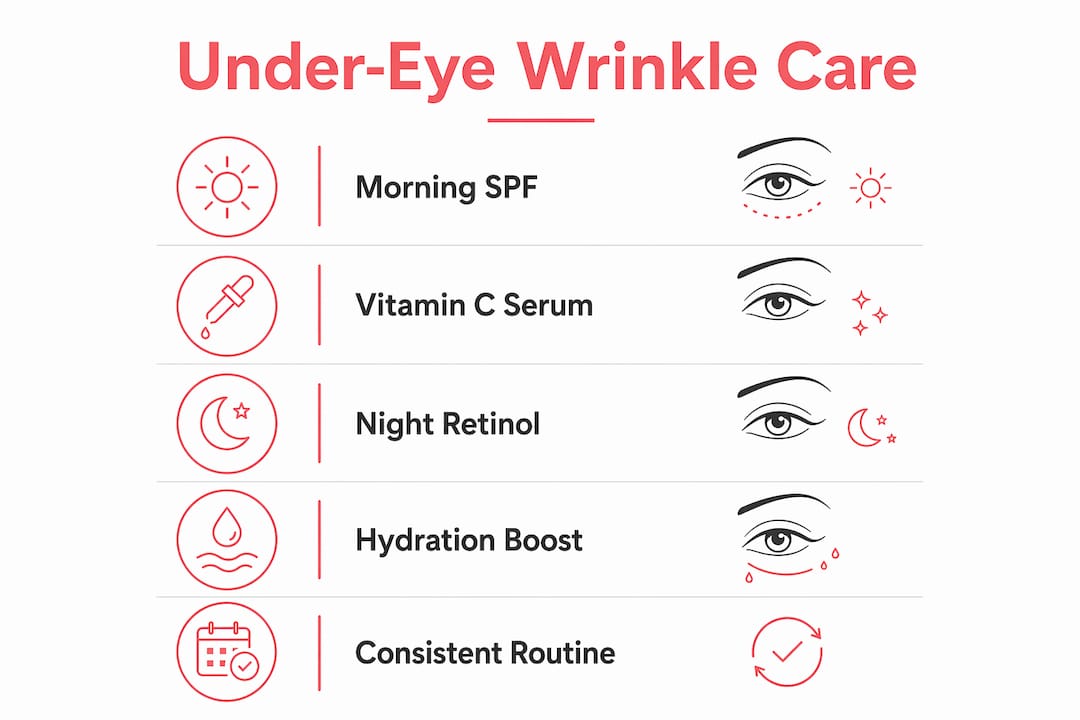
The most effective home treatment for wrinkles under eyes combines daily broad-spectrum SPF, low-concentration retinol, Vitamin C serum, and humectant-rich moisturizers applied consistently over months. The skin under your eyes is up to 10 times thinner than the rest of your face, which makes it the first area to show fine lines and the last to forgive neglect. Dermatologists classify this zone as periorbital skin, and the standard clinical term for age-related changes here is periorbital rhytides. Knowing that term matters because it tells you the treatments that work are the same ones used in clinical settings, just at lower intensities. Visible improvement takes three to six months of consistent effort, but the results are real.
Why sun protection is the foundation of every home treatment for wrinkles under eyes
UV radiation is the single largest driver of premature periorbital aging. It activates enzymes that break down collagen and elastin, the structural proteins that keep skin firm and smooth. Once those proteins degrade, the skin thins further and creases deepen with every facial expression.
The under-eye area is frequently missed during sunscreen application. Most people apply SPF to their cheeks and forehead and stop there. Daily SPF 30+ use is the non-negotiable first step to slow wrinkle progression in this zone.
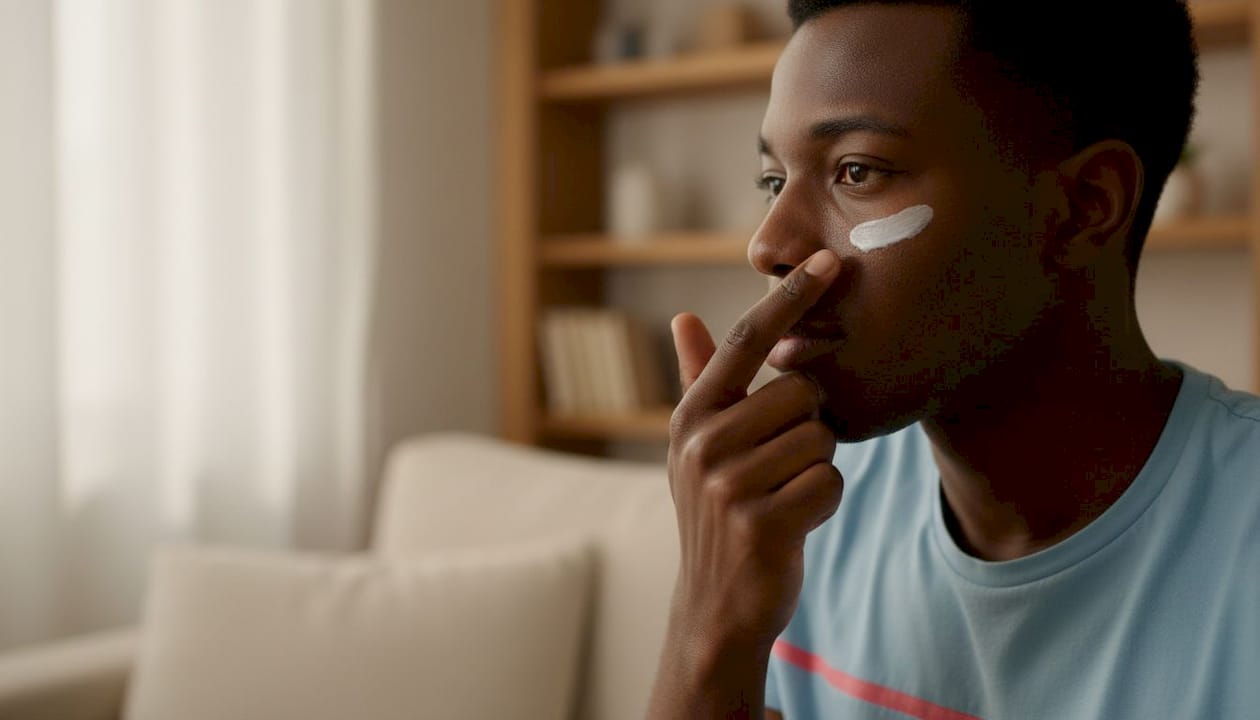
Mineral formulas with zinc oxide or titanium dioxide are the right choice here. Chemical sunscreen filters can irritate the thin periorbital skin and cause stinging, especially if you have sensitive eyes. Mineral filters sit on top of the skin and reflect UV rays without penetrating.
Apply sunscreen correctly by:
- Dotting a small amount along the orbital bone, not directly on the lower lid
- Blending gently with your ring finger, which applies the least pressure
- Reapplying every two hours when outdoors, even on overcast days
- Pairing SPF with UV-blocking sunglasses for physical protection
Pro Tip: Apply your mineral SPF as the final step in your morning routine, after moisturizer but before makeup. This locks in hydration and creates a protective barrier.
How to use retinol and Vitamin C serums to reduce eye wrinkles at home
Retinol is the most clinically supported topical ingredient for reducing periorbital fine lines. It works by accelerating cell turnover and stimulating collagen synthesis in the dermis. The catch is that the under-eye skin is too thin to tolerate standard facial retinol concentrations without irritation.
Follow this sequence for safe, effective use:
- Start at 0.025% to 0.05% concentration. This range is strong enough to trigger collagen remodeling without causing the peeling and redness that make people quit.
- Apply to the orbital bone, not the lid. Retinol applied near the orbital bone migrates inward through normal skin movement. Direct application on the thinnest skin causes unnecessary irritation.
- Begin twice weekly. Use it two nights per week for the first four weeks, then three nights per week for the next four weeks, then nightly if your skin tolerates it.
- Build to nightly use over six to eight weeks. This gradual ramp-up lets your skin adapt and dramatically reduces the chance of a reaction.
- Expect results in three to six months. Low-concentration retinol thickens the dermis over this period, producing visible wrinkle reduction. Patience is the primary driver of success here.
Vitamin C serum works differently. It neutralizes free radicals from UV exposure and pollution, and it directly supports collagen synthesis by activating the enzymes that build collagen fibers. For the under-eye area, choose a Vitamin C serum at 10–20% concentration in opaque, airless packaging with a pH below 3.5. Packaging matters because Vitamin C oxidizes quickly when exposed to air and light, turning orange and losing its potency. Apply it in the morning before SPF for maximum antioxidant protection throughout the day.
Pro Tip: Never layer retinol and Vitamin C in the same application. Use Vitamin C in the morning and retinol at night to avoid pH conflicts and reduce irritation risk.
Natural and topical hydration remedies to soften fine lines
Hydration is the fastest way to make fine lines look less pronounced. When periorbital skin is dehydrated, fine lines appear deeper and more numerous. Humectants attract water molecules from the environment and the deeper skin layers, plumping the surface temporarily.
The most effective natural and topical hydrators for the under-eye area include:
- Hyaluronic acid: A humectant that holds water to plump surface skin. It does not produce structural changes, but the visual softening effect is immediate and cumulative with daily use.
- Aloe vera: Provides lightweight hydration and contains compounds that calm inflammation. It absorbs quickly without leaving residue.
- Jojoba oil: Closely mimics the skin’s natural sebum. It seals in moisture without clogging pores and delivers antioxidants that slow oxidative damage.
- Sweet almond oil: Rich in Vitamin E, it softens the skin and supports the lipid barrier. Natural oils like almond and jojoba hydrate effectively but do not reverse deep structural wrinkles.
For quick, temporary relief, cold compresses, cucumber slices, and green tea bags all work by constricting blood vessels and reducing puffiness. These remedies temporarily reduce puffiness and give the appearance of smoother skin, but effects last only a few hours. They are best used on mornings when you need to look refreshed quickly, not as a substitute for a consistent routine.
Caffeine-based eye creams offer a similar short-term benefit. Caffeine-containing topical products temporarily improve puffiness through vasoconstriction, making wrinkles appear less deep for a few hours. Pair a caffeine eye cream with hyaluronic acid for both immediate and sustained hydration.
| Ingredient | Mechanism | Duration of effect |
|---|---|---|
| Hyaluronic acid | Humectant, draws water to skin surface | Cumulative with daily use |
| Caffeine | Vasoconstriction, reduces puffiness | 2–4 hours |
| Aloe vera | Anti-inflammatory, lightweight hydration | Cumulative with daily use |
| Cold compress | Vasoconstriction, reduces swelling | 1–3 hours |
| Jojoba oil | Barrier support, antioxidant delivery | Cumulative with daily use |
Daily habits that support under-eye skin health and wrinkle prevention
Lifestyle choices either accelerate or slow periorbital aging. No topical routine fully compensates for habits that repeatedly stress the skin. The good news is that the most impactful changes cost nothing.
Sleeping on your back reduces sleep lines that can become permanent wrinkles over time. Side and stomach sleeping press your face into a pillow for hours each night, creating creases that deepen with repetition. A silk or satin pillowcase reduces friction if you cannot change your sleep position.
Key daily habits that protect periorbital skin:
- Drink enough water throughout the day to maintain skin elasticity from within. Dehydrated skin loses plumpness and shows lines more readily.
- Eat antioxidant-rich foods including berries, leafy greens, and fatty fish. Omega-3 fatty acids support the skin’s lipid barrier, which retains moisture and resists environmental damage.
- Use your ring finger when applying any product around the eyes. It applies less pressure than other fingers and reduces the mechanical stress that contributes to sagging.
- Never rub or pull the under-eye skin when removing makeup. Use a gentle micellar water on a soft cotton pad and press lightly rather than wiping.
- Wear UV-blocking sunglasses outdoors. Squinting repeatedly contracts the orbicularis oculi muscle and deepens crow’s feet over years.
Pro Tip: Pair your evening routine with a skincare routine for aging skin that layers hydration before actives. Apply hyaluronic acid to damp skin, let it absorb, then apply retinol to the orbital bone.
Common mistakes that undermine home treatments for under-eye wrinkles
The most common reason home treatments fail is not the wrong product. It is incorrect application or unrealistic expectations. Understanding the pitfalls saves months of wasted effort and prevents skin damage.
- Applying high-strength retinol directly under the eyes. Standard facial retinol at 0.1% or higher causes significant irritation on periorbital skin. Common errors include applying high-strength retinol directly under the eyes and expecting quick reversal from natural remedies alone. Start low and stay low.
- Skipping patch testing. Apply any new active to the inner forearm for 48 hours before using it near your eyes. This step catches sensitivities before they cause a reaction in a visible area.
- Expecting natural remedies to reverse deep wrinkles. Aloe vera, cucumber, and green tea are hydrators and soothers. They soften fine lines and reduce puffiness. They do not rebuild collagen or reverse structural skin changes. Home remedies slow further damage and soften fine lines but do not fully reverse deep-set wrinkles.
- Quitting retinol too early. Many people stop using retinol within the first four weeks because they see no change or experience mild flaking. Collagen remodeling takes three to six months. Stopping early means starting over.
- Ignoring SPF on cloudy days. UV radiation penetrates cloud cover. Skipping sunscreen on overcast days accumulates UV damage that compounds over years.
“Instant wrinkle reduction from natural ingredients is due to superficial hydration and vasoconstriction. Collagen remodeling requires months of appropriate topical application. Consistency is not optional; it is the treatment.”
When progress stalls after six months of consistent effort, consult a board-certified dermatologist. Deeper structural wrinkles may respond better to in-office procedures like professional HIFU, laser resurfacing, or injectable treatments. Home care excels at prevention and early-stage improvement. It has limits for advanced periorbital aging.
Key Takeaways
Consistent, layered home care with SPF, retinol, Vitamin C, and humectants produces real improvement in periorbital wrinkles over three to six months.
| Point | Details |
|---|---|
| SPF is non-negotiable | Apply mineral SPF 30+ to the orbital bone daily to stop UV-driven collagen loss. |
| Retinol concentration matters | Use 0.025%–0.05% retinol near the orbital bone, building from twice weekly to nightly over six to eight weeks. |
| Vitamin C needs proper formulation | Choose 10–20% concentration in opaque, airless packaging with pH below 3.5 for stable collagen support. |
| Natural remedies hydrate, not rebuild | Aloe vera, jojoba oil, and caffeine soften fine lines temporarily but do not reverse structural wrinkles. |
| Lifestyle habits amplify results | Back sleeping, ring-finger application, and antioxidant nutrition protect periorbital skin between treatments. |
What I’ve learned from years of watching people treat under-eye wrinkles at home
The single biggest mistake I see is treating under-eye wrinkles as a product problem when it is really a patience problem. People spend money on the right ingredients, apply them incorrectly for three weeks, see no change, and switch to something new. That cycle repeats indefinitely and produces nothing.
The best home treatments for wrinkles are not complicated. SPF every morning, Vitamin C serum underneath it, retinol at the orbital bone three nights a week, and a hyaluronic acid moisturizer sealing everything in at night. That four-step routine, done consistently, outperforms any elaborate ten-product system used sporadically.
Natural remedies have a real place in this routine, but their role is support, not correction. Green tea bags on a Monday morning before a meeting are useful. Expecting them to replace retinol over six months is not realistic. The periorbital skin responds to collagen-stimulating actives and UV protection. Everything else is maintenance.
My honest view on clinical procedures: they are not a shortcut, they are a different category. Home care prevents and softens. Clinical HIFU, laser, and injectables correct structural damage that topicals cannot reach. If you are in your late 40s or 50s with established deep lines, a layered home routine is still worth doing because it maintains results and prevents new damage. But setting the expectation that retinol alone will erase deep wrinkles sets you up for disappointment.
Start simple. Stay consistent. Measure progress in months, not weeks.
— Customer
Sonedaskincare’s VividLift: advanced home technology for under-eye collagen support
Topical treatments do the heavy lifting for surface-level improvement. When you want to address collagen loss at a deeper structural level without a clinic visit, Sonedaskincare’s VividLift™ home HIFU device delivers High-Intensity Focused Ultrasound directly to the dermis and subcutaneous tissue, the same technology used in professional skin-tightening treatments.

The VividLift™ 2-in-1 HIFU+Sono device also uses advanced sonophoresis to drive topical ingredients deeper into the skin, making your Vitamin C serum and hyaluronic acid work harder. Sonedaskincare reports a 175% increase in skin hydration in clinical testing and a 100% user satisfaction rate. For anyone committed to a serious at-home anti-aging routine, the VividLift bundle offer pairs the device with targeted skin sequences for collagen support and hydration. It is the logical next step when topicals alone are not enough.
FAQ
What is the best home treatment for wrinkles under eyes?
The best home treatment combines daily mineral SPF 30+, low-concentration retinol (0.025%–0.05%) applied near the orbital bone, and a Vitamin C serum at 10–20% concentration. Consistent use over three to six months produces visible collagen remodeling and wrinkle reduction.
How long does it take to see results from at-home eye wrinkle treatments?
Retinol and Vitamin C require three to six months of consistent daily use before structural improvements become visible. Hydrating ingredients like hyaluronic acid and caffeine produce temporary softening within hours but do not change skin structure.
Can natural remedies actually reduce under-eye wrinkles?
Natural remedies like aloe vera, jojoba oil, and cold compresses hydrate and temporarily reduce puffiness, making fine lines look less pronounced. They do not reverse deep structural wrinkles; that requires collagen-stimulating actives like retinol used consistently over months.
Is retinol safe to use under the eyes?
Retinol is safe under the eyes when used at low concentrations (0.025%–0.05%) and applied to the orbital bone rather than directly on the thinnest lid skin. Build use gradually from twice weekly to nightly over six to eight weeks to minimize irritation.
Do home remedies for dark circles also help with under-eye wrinkles?
Caffeine-based products and cold compresses reduce both puffiness and the appearance of dark circles by constricting blood vessels. They do not treat the structural causes of either dark circles or wrinkles, but they complement a routine that includes SPF and retinol for overall under-eye improvement.