Easy Skincare Routine for Your 40s: 4 Steps + Devices

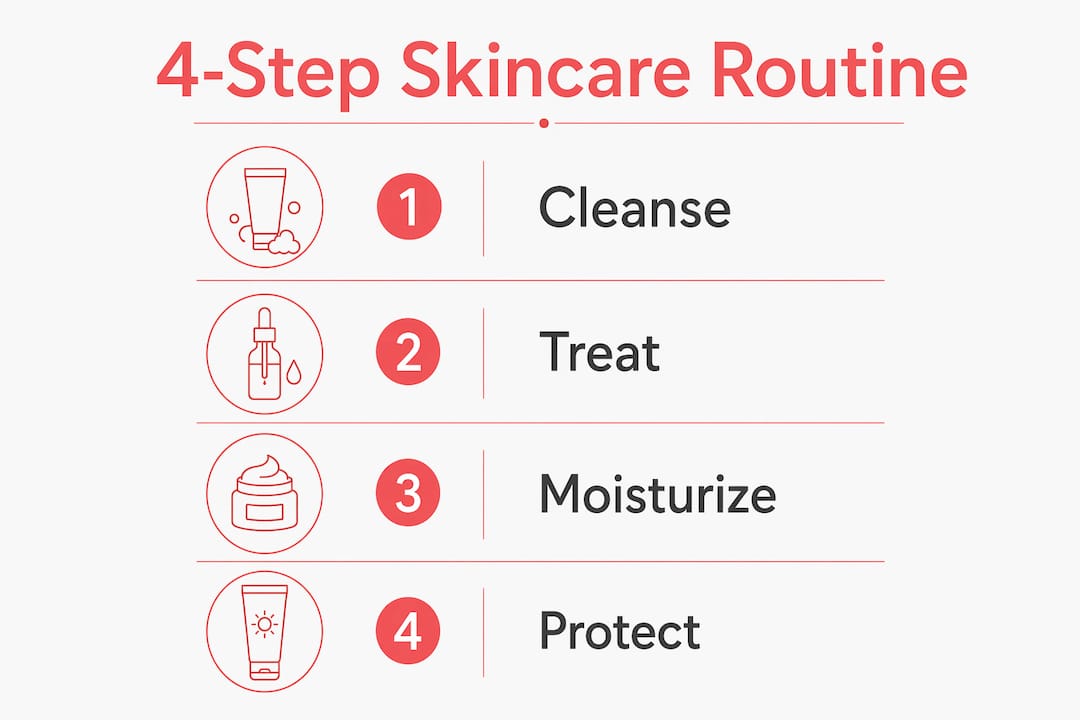
Your 40s call for a smarter approach, not a longer one. A minimalist 4-step AM/PM routine — cleanse, treat, moisturize, protect — delivers the biggest anti-aging wins, and occasional at-home HIFU + sonophoresis sessions with a device like Sonedaskincare’s VividLift™ 2-in-1 HIFU+Sono safely enhance hydration and absorption on top of that foundation.
TL;DR
- AM: Gentle cleanser → Vitamin C serum → moisturizer with ceramides/hyaluronic acid → SPF 30+
- PM: Gentle cleanser → retinoid (2–3 nights/week) → richer moisturizer
- Device sessions: Monthly or biweekly maintenance with VividLift™ for enhanced product absorption and surface tone
- Realistic expectation: At-home devices support hydration and absorption. They do not replicate clinical HIFU’s structural lifting depth.
Table of Contents
- What does an easy skincare routine for your 40s actually look like?
- How do HIFU and sonophoresis actually work at home?
- Which ingredients pair best with sonophoresis in your 40s?
- Step-by-step protocol for your first VividLift session
- Simple weekly add-ons that amplify your results
- When will you actually see results?
- What does an at-home HIFU device cost, and what should you look for?
- When should you stop and see a dermatologist?
- Key Takeaways
- What I noticed after adding a device to my routine
- The VividLift™ 2-in-1 HIFU+Sono: professional-grade results at home
- Useful sources and further reading
What does an easy skincare routine for your 40s actually look like?
Your skin in your 40s produces less collagen, becomes drier, and shows fine lines more readily. The goal shifts from pure prevention to active repair and hydration. Four steps done consistently outperform a 10-step routine done sporadically.
AM routine
- Gentle, non-stripping cleanser (cream or gel formula)
- Vitamin C serum on clean, dry skin — brightens, supports collagen, and boosts SPF effectiveness
- Moisturizer with ceramides, hyaluronic acid, or peptides
- Broad-spectrum SPF 30+ — the single most effective anti-aging product available, applied to face, neck, and chest
PM routine
- Gentle cleanser (double-cleanse if you wore SPF or makeup)
- Retinoid 2–3 nights per week — start at the lowest strength and increase gradually
- Richer moisturizer; add a facial oil or occlusive layer if your skin runs very dry
Extend every step to your neck and chest. Those areas show age just as fast as your face and are frequently skipped. For sensitive skin, swap Vitamin C for niacinamide in the AM and buffer your retinoid with moisturizer at night.
Pro Tip: Dermatologists consistently recommend keeping the routine to four core steps. Fewer decisions each morning means fewer skipped nights — and consistency is what actually moves the needle on aging skin.
How do HIFU and sonophoresis actually work at home?
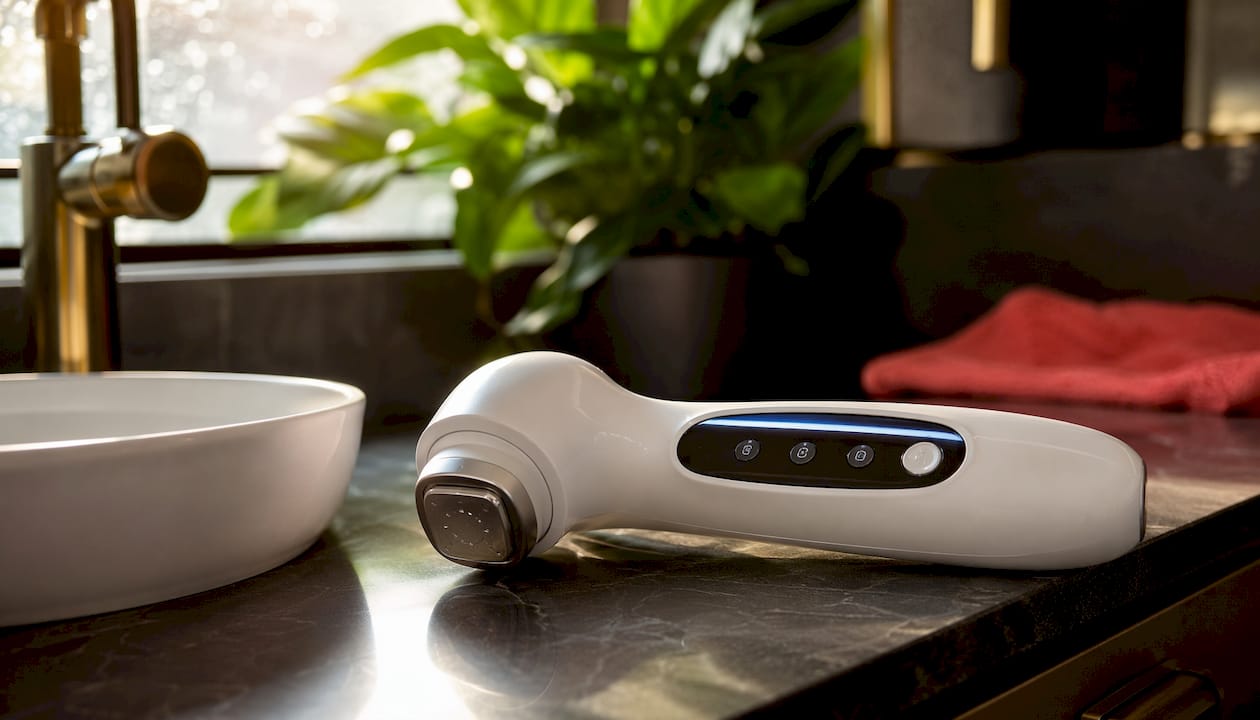
Clinical HIFU uses high-energy, focused ultrasound to reach the deep dermal and SMAS layers for structural lifting. At-home devices operate at much lower energy levels and work differently: through surface warming, modest microcirculation improvements, and sonophoresis.
Sonophoresis is ultrasound-enhanced topical absorption. Low-frequency ultrasound transiently increases the skin’s permeability, allowing water-soluble actives like hyaluronic acid and Vitamin C to penetrate more effectively. That is the primary mechanism behind at-home ultrasound devices — and it is genuinely useful.
At-home ultrasound devices are best understood as targeted support tools: they boost absorption and surface quality between professional treatments rather than replace clinical procedures for structural lift.
Realistic benefits you can expect from an at-home device:
- Improved absorption of water-based serums
- Surface warming and mild lymphatic support
- Enhanced microcirculation for a temporary glow
- Gradual improvement in surface hydration with consistent use
What they do not do: reach the SMAS layer, produce the collagen coagulation points of clinical HIFU, or replace in-office treatments for significant laxity.
Which ingredients pair best with sonophoresis in your 40s?
Sonophoresis enhances delivery of water-soluble actives. Water-based serums transmit ultrasound energy efficiently; oil-based formulas do not. That makes ingredient selection straightforward.
| Ingredient | Why it pairs well | Device-use notes |
|---|---|---|
| Hyaluronic acid | Water-soluble, hydrating, non-irritating | Ideal serum to use during sessions |
| Vitamin C (L-ascorbic acid, water-based) | Antioxidant, collagen-supporting | Use a stable, water-based formula |
| Peptides | Support firmness, low irritation risk | Safe for regular device sessions |
| Niacinamide | Brightening, barrier-supporting | Pairs well; avoid high concentrations with active retinoid nights |
Do not combine with device sessions:
- Potent AHAs or BHAs (glycolic, salicylic acid) — increased penetration raises irritation risk
- Active retinoids — schedule device sessions on non-retinoid nights
- Physical exfoliants — never use a device over freshly exfoliated skin
Beginner schedule: Start with one device session per week using only a hyaluronic acid serum. Add peptides after two to three weeks once your skin has adjusted.
Step-by-step protocol for your first VividLift session
Follow this sequence for a safe, effective at-home session.
- Cleanse thoroughly. No residue, no active irritation, no open wounds.
- Check contraindications. Pregnancy, electrical implants near the treatment site, active skin infection, or recent filler in the area — stop and consult a professional first.
- Apply conductive gel generously. A water-based gel is mandatory for effective energy transfer. Ultrasound transmits poorly through air; skipping gel reduces efficacy and may cause discomfort.
- Apply your serum over the gel (hyaluronic acid or peptides).
- Move the device in slow, upward strokes. Spend approximately 30–60 seconds per facial zone (forehead, cheeks, jawline, neck). Never hold the device stationary.
- Follow device dosing instructions exactly. The VividLift Protocol Guide specifies timing per zone and maximum safe session frequency.
- Finish with your regular moisturizer. No retinoid on device nights.
Frequency: Monthly or biweekly maintenance sessions, per device instructions. More is not better with ultrasound devices.
Pro Tip: After every session, wipe the transducer head clean with a soft, damp cloth. Gel residue left on the head degrades performance over time. Store the device in its case away from direct heat.
Simple weekly add-ons that amplify your results
Keep add-ons infrequent. The goal is amplification, not complexity.
- Chemical exfoliant (lactic or glycolic acid): 1–2 times per week, on non-retinoid, non-device nights
- Hydrating sheet mask or overnight mask: Once weekly, ideally the night after a device session to lock in absorption benefits
- LED therapy: Red or near-infrared LED sessions work well as an adjunct on rest days between device sessions
Schedule add-ons so they never stack with retinoid nights or device sessions. A simple rotation: retinoid Monday/Wednesday/Friday, device session Saturday, exfoliant Tuesday, mask Sunday.
Pro Tip: If your skin is sensitive or you are new to retinoids, stick to lactic acid over glycolic — it exfoliates more gently and carries less irritation risk when your barrier is still adapting.
When will you actually see results?
Timelines vary by ingredient and mechanism. Here is what to expect:
- Days to weeks: Improved hydration and surface glow from hyaluronic acid and device-enhanced absorption
- 8–12 weeks: Retinoid-driven texture improvements and early fine-line reduction
- 2–3 months: Gradual collagen remodeling effects from consistent retinoid use; cumulative device benefits on surface tone
A clinical study combining HIFU with topical hyaluronic acid found hydration scores nearly doubled compared to topical application alone (company-reported clinical data: 175% increase in skin hydration and 100% user satisfaction). At-home devices produce more modest surface-level improvements than clinical HIFU, but consistent use adds up.
Track progress with monthly photos in the same lighting. If you see no change after three months of consistent use, that is the right time to consult a dermatologist about adding a professional treatment.
What does an at-home HIFU device cost, and what should you look for?
At-home ultrasound and HIFU-style devices range widely in price and quality. Multi-function devices that combine HIFU, sonophoresis, EMS toning, and LED therapy sit at the higher end of the consumer market and offer the most versatility for a complete anti-aging routine.
Buying checklist:
- Proven safety features and clear dosing instructions per facial zone
- Mandatory conductive-gel requirement stated in the manual (a sign of legitimate ultrasound technology)
- Clinical evidence or published protocol guides
- Warranty and accessible customer service
- Payment plan options for higher-end devices
Sonedaskincare’s VividLift™ 2-in-1 HIFU+Sono combines HIFU and sonophoresis in a single device, with a published protocol guide and payment plan options. For price-sensitive buyers, an open-box option is also available. Review the best face lifting devices guide for a broader feature comparison before you buy.
When should you stop and see a dermatologist?
Stop device use immediately if you notice any of the following:
- Prolonged redness lasting more than 48 hours
- Blistering, burns, or severe pain during or after a session
- New nodules, lumps, or persistent swelling
- Worsening skin texture or unexpected breakouts
Contraindications — do not use an at-home ultrasound device if you have:
- Active skin infection or open wounds in the treatment area
- Pregnancy or breastfeeding
- Electrical implants (pacemakers, cochlear implants) near the treatment site
- Recent dermal filler in the planned treatment area — wait for professional clearance
- Autoimmune skin conditions or a history of keloid scarring
Questions to bring to your dermatologist:
- Can I use a retinoid and an at-home ultrasound device in the same weekly routine?
- Are there any contraindications specific to my skin type or current medications?
- When would a professional HIFU treatment add value beyond what an at-home device provides?
This article is general information, not medical advice. Confirm the right approach for your specific situation with a licensed dermatologist.
Key Takeaways
A consistent 4-step routine anchored by SPF, retinoids, and ceramide-rich moisturizer forms the foundation of effective anti-aging skincare in your 40s, with at-home HIFU + sonophoresis sessions adding up to a 175% increase in skin hydration and 100% user satisfaction according to company protocol.
| Point | Details |
|---|---|
| 4-step routine wins | Cleanse, treat, moisturize, protect — done consistently — outperforms any longer routine done sporadically. |
| Retinoids take time | Start 2–3 nights per week; expect texture improvements at 8–12 weeks, not days. |
| Devices support, not replace | At-home ultrasound boosts absorption and surface hydration; it does not replicate clinical HIFU’s structural depth. |
| Safety first | Always use conductive gel, avoid device sessions on retinoid nights, and stop immediately if you experience blistering or prolonged redness. |
| Sonedaskincare VividLift™ | Combines HIFU and sonophoresis with a published protocol guide — a clinically supported option for at-home device users. |
What I noticed after adding a device to my routine
Most people in their 40s already know the basics: wear SPF, use a retinoid, moisturize. The gap is usually not knowledge — it is follow-through. What surprised me about adding a sonophoresis device to my routine was how much it changed my relationship with the serum step. Knowing the device was going to enhance absorption made me more deliberate about which serum I applied and when. That shift in attention, more than any single product, is what improved my consistency.
The practical tip I would pass on: do your device session on a weekend evening when you are not rushed. Slow strokes, generous gel, and a good hyaluronic acid serum. Keep it to 10–15 minutes. The skincare routine for aging skin guide from Sonedaskincare helped me sequence everything correctly from the start.
The VividLift™ 2-in-1 HIFU+Sono: professional-grade results at home
Spa-level HIFU and sonophoresis technology used to mean expensive clinic visits. Sonedaskincare brings that same professional-grade approach into your daily routine with the VividLift™ 2-in-1 HIFU+Sono device.
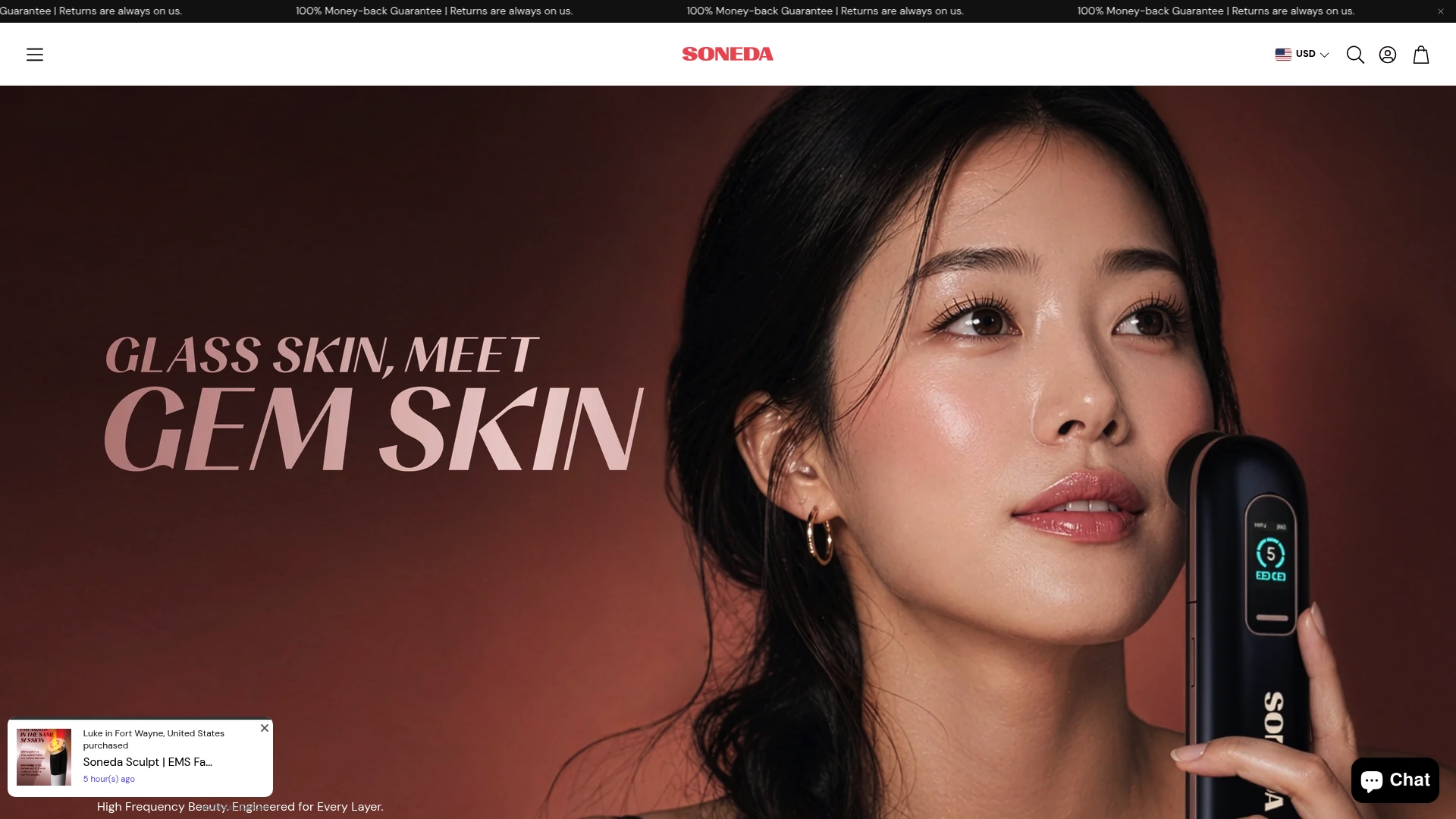
The VividLift™ combines HIFU and sonophoresis in one device, with EMS toning and LED therapy built in. Sonedaskincare reports a 175% increase in skin hydration and 100% user satisfaction according to their protocol (company-sourced data). Every device comes with a detailed protocol guide, so you know exactly how to use it safely from day one. Payment plan options make it accessible without a large upfront commitment.
Ready to add professional-grade technology to your routine? Preorder the VividLift™ or explore the full device protocol guide to see exactly what your first session looks like.
Useful sources and further reading
- American Academy of Dermatology — Skin Care in Your 40s and 50s: Foundational guidance on SPF, moisturizing, and anti-aging priorities. Supports the daily routine and timeline sections.
- BlushPicks — HIFU vs. At-Home Ultrasound Devices: Clear comparison of clinical vs. at-home device mechanisms, gel requirements, and realistic benefits. Supports the devices overview and protocol sections.
- Classys — HIFU Combined with Topical Agents Study: Peer-reviewed trial showing hydration and fine-wrinkle improvements when HIFU is combined with topical hyaluronic acid. Supports the timeline and device sections.
- Sonedaskincare — All About Sonophoresis: Science and recommended use of sonophoresis with topical serums. Supports the actives pairing and protocol sections.
- Sonedaskincare — VividLift Protocol Guide: Step-by-step device protocol with zone timing and safety guidance. Supports the protocol and buying guide sections.
- RealSimple — Dermatologist-Recommended Simple Skincare Routine: Supports the 4-step adherence argument and the key takeaways.
- Skincare Routine Simplification Checklist: Practical checklist for readers building or simplifying their first consistent routine.