How to Get Rid of Wrinkles Permanently: Real Options

A small number of procedures can produce genuinely permanent changes to treated skin layers. Dermabrasion physically removes the outer skin layers, and Cleveland Clinic classifies that change as permanent for the tissue removed. Facelifts and ablative laser resurfacing deliver long-lasting results, with facelifts typically lasting 7–10 years and many laser protocols providing improvements for up to about 5 years, but aging continues beneath the surface. For most people, the most realistic path to smooth, youthful skin combines one or two in-office procedures with a disciplined maintenance plan.
Your three immediate next steps:
- Book a consultation with a board-certified dermatologist or plastic surgeon. Only a clinician who examines your skin can match the right procedure to your wrinkle type, depth, and skin tone.
- Identify your primary concern before you go. Dynamic lines (forehead, crow’s feet) respond differently than deep static folds or volume loss. Knowing which you want to address focuses the conversation.
- Plan for maintenance from day one. Even the most aggressive procedures do not stop aging. Build a home-care and scheduled in-office maintenance strategy alongside any clinical treatment. At-home devices like the Sonedaskincare VividLift™ can support collagen production between clinic visits.
Table of Contents
- What wrinkles are and why treatment type depends on wrinkle type
- ## Procedures that can give you permanent or near-permanent improvement
- Long-lasting treatments that require maintenance over time
- Recovery timelines, realistic costs, and financing
- Risks, side effects, and who should think carefully before proceeding
- How combination therapy and a maintenance plan extend your results
- How to choose a clinician and what to ask at your consultation
- The role of at-home professional devices: what the Sonedaskincare VividLift can and cannot do
- Key Takeaways
- The Sonedaskincare VividLift™: professional-grade maintenance at home
- Authoritative sources and further reading
What wrinkles are and why treatment type depends on wrinkle type
Not all wrinkles respond to the same treatment. The distinction between dynamic and static wrinkles is the single most important concept to understand before choosing any procedure.
Dynamic wrinkles form from repeated muscle contractions. Squinting, smiling, and frowning crease the overlying skin thousands of times a day. Over years, those creases become etched in even when the face is at rest. Crow’s feet, forehead lines, and the “11s” between the brows are classic examples.
Static wrinkles are present at rest and result from collagen and elastin loss, volume depletion, and skin laxity rather than muscle movement. Deep nasolabial folds, marionette lines, and the general crepiness that comes with sun damage fall into this category.
Primary causes of wrinkles:
- Intrinsic aging: Collagen production slows with age, and the skin’s structural scaffold weakens.
- Photoaging: UV exposure degrades collagen and elastin faster than any other environmental factor. Daily broad-spectrum sunscreen (SPF 30+) is the single highest-yield preventive measure available.
- Smoking: Reduces blood flow to the skin and accelerates collagen breakdown.
- Repetitive muscle movement: The mechanical cause of dynamic wrinkles.
- Genetics: Determines baseline skin thickness, oil production, and how quickly photoaging progresses.
Treatment mapping by wrinkle type:
| Wrinkle Type | Primary Driver | Best-Matched Treatments |
|---|---|---|
| Dynamic | Muscle movement | Botulinum toxin (neuromodulators) |
| Static (surface) | Collagen/texture loss | Resurfacing, chemical peels, retinoids |
| Static (volume) | Fat and collagen depletion | Dermal fillers, bio-stimulators |
| Deep folds/laxity | Tissue descent, volume loss | Fillers, surgical lifting, energy devices |
Topical retinoids like tretinoin address surface texture by increasing cell turnover and stimulating collagen, making them a foundational part of any home-care regimen regardless of which in-office procedure you choose. For a full at-home skincare strategy that supports long-term results, the skincare routine for aging skin guide covers the essentials.
## Procedures that can give you permanent or near-permanent improvement
The word “permanent” in dermatology has a precise meaning: a change to tissue that has been physically removed or structurally altered cannot reverse. That is a narrower category than most people expect.
Dermabrasion
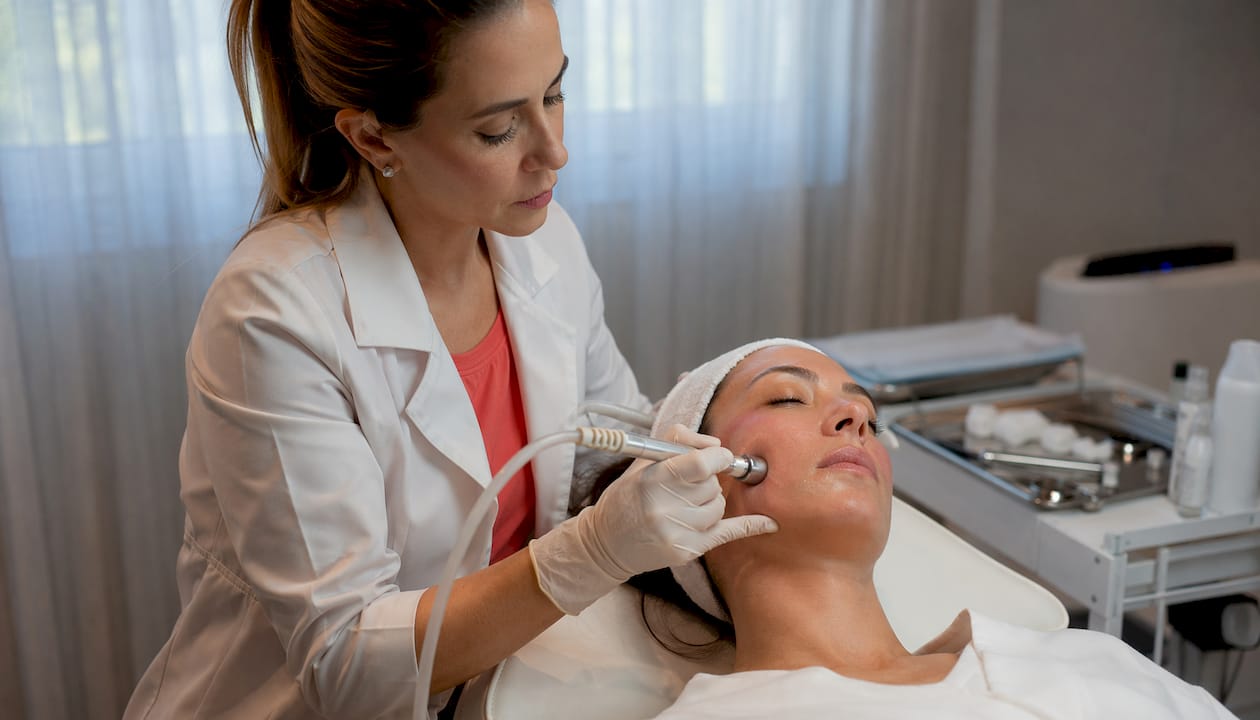
Dermabrasion uses a rotating abrasive instrument to remove the epidermis and upper dermis. Because those skin layers are physically gone, Cleveland Clinic describes the result as permanent for the treated layer. The trade-off is significant: recovery takes weeks, the risk of scarring and pigment changes is real, and lifelong sun protection is non-negotiable afterward. Dermabrasion is best suited to fair-skinned patients with surface texture concerns, acne scarring, or fine perioral lines.
Facelift surgery
A facelift repositions skin and deeper facial tissues to restore contours lost to aging and gravity. Results typically last 7–10 years depending on technique and individual factors. That is a surgical reset, not a permanent fix. Aging continues beneath the tissues, and most patients who have a facelift in their 50s consider a secondary procedure in their late 60s or 70s. Recovery runs a few weeks before social presentability, with full resolution of swelling taking months.
Ablative laser resurfacing (CO2 and Er:YAG)
Ablative laser resurfacing removes the epidermal and superficial dermal layers to reduce photoaging and deep rhytides. CO2 lasers produce collagen contraction immediately and stimulate new collagen over months. Studies have shown improvement in rhytides of up to 90% with CO2 laser ablation. Results can last up to about 5 years. Non-fractional CO2 laser use is not recommended for Fitzpatrick skin types IV or higher due to a higher risk of dyspigmentation; for darker skin tones, Er:YAG lasers or fractional delivery are preferred.
Who is a reasonable candidate for permanent or long-lasting procedures?
- Lighter Fitzpatrick skin types (I–III) for aggressive resurfacing
- No active skin infections or open wounds in the treatment area
- Non-smoker, or willing to quit before and after surgery
- Realistic expectations: understands aging continues post-procedure
- No bleeding disorders or immunosuppressive conditions
- Not pregnant
Key risks to discuss with your clinician:
- Infection (bacterial, viral reactivation of herpes simplex)
- Permanent scarring
- Pigment changes (hyperpigmentation or hypopigmentation)
- Prolonged erythema (redness lasting weeks to months after CO2 laser)
- Anesthesia risks for surgical procedures
Long-lasting treatments that require maintenance over time
Most people who want to smooth out wrinkles will spend the majority of their treatment budget here. These procedures deliver real, visible results, but they work on a schedule.
Botulinum toxin (neuromodulators)
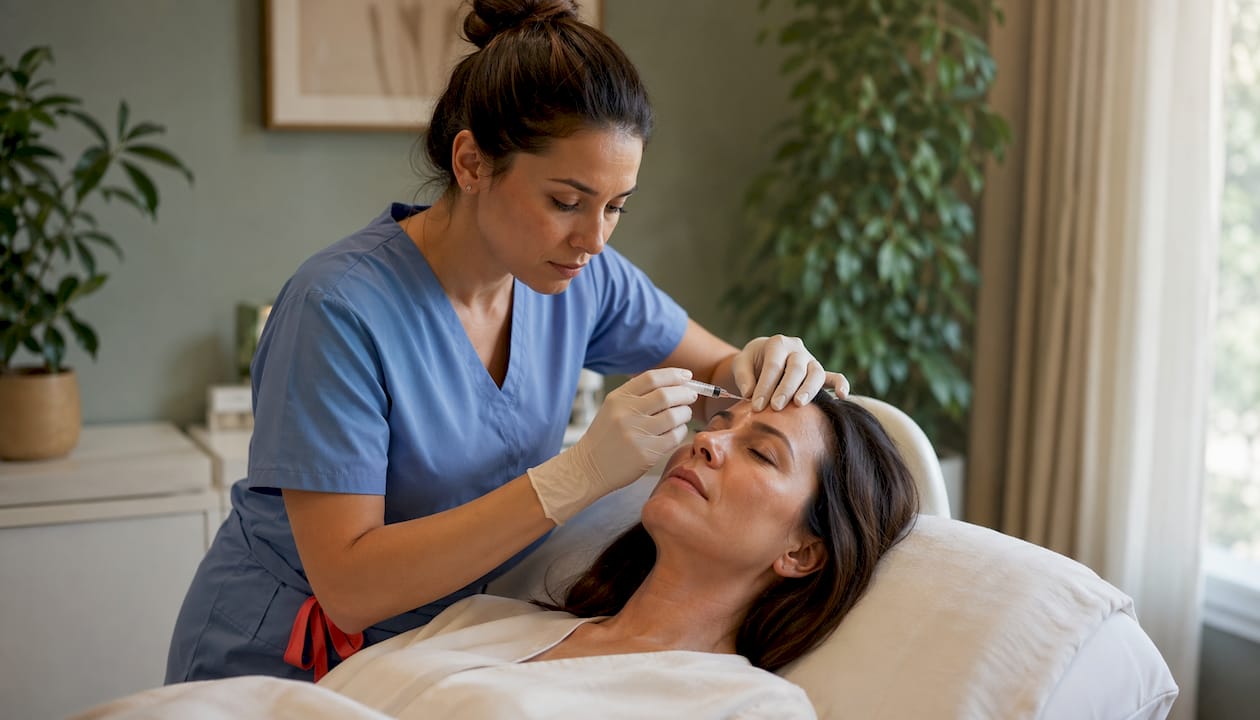
Botulinum toxin relaxes the muscles that create dynamic lines. Mayo Clinic confirms that effects last a few months and require repeat sessions to maintain results. Most patients schedule injections every few months. Starting earlier in life, even in the late 20s or 30s, may prevent dynamic lines from becoming permanently etched static ones. Downtime is minimal: mild bruising or swelling resolves within days.
Hyaluronic acid fillers and bio-stimulators
Hyaluronic acid (HA) fillers restore volume and soften static folds. Mayo Clinic notes that HA fillers typically need reinjection around six months, though some bio-stimulators (such as poly-L-lactic acid or calcium hydroxylapatite) can last considerably longer by stimulating the body’s own collagen. HA fillers are reversible with hyaluronidase, which makes them a lower-risk entry point for first-time patients.
Non-ablative and fractional laser resurfacing
Non-ablative lasers heat the dermis without removing the surface, stimulating collagen with minimal downtime (1–3 days). Fractional CO2 lasers offer a middle ground: more remodeling than non-ablative options, with a recovery of 5–10 days for fractional treatments versus 14–21 days for full-field CO2 resurfacing. Multi-device protocols that combine non-ablative and ablative elements can deliver multi-year improvement, though they increase both downtime and risk.
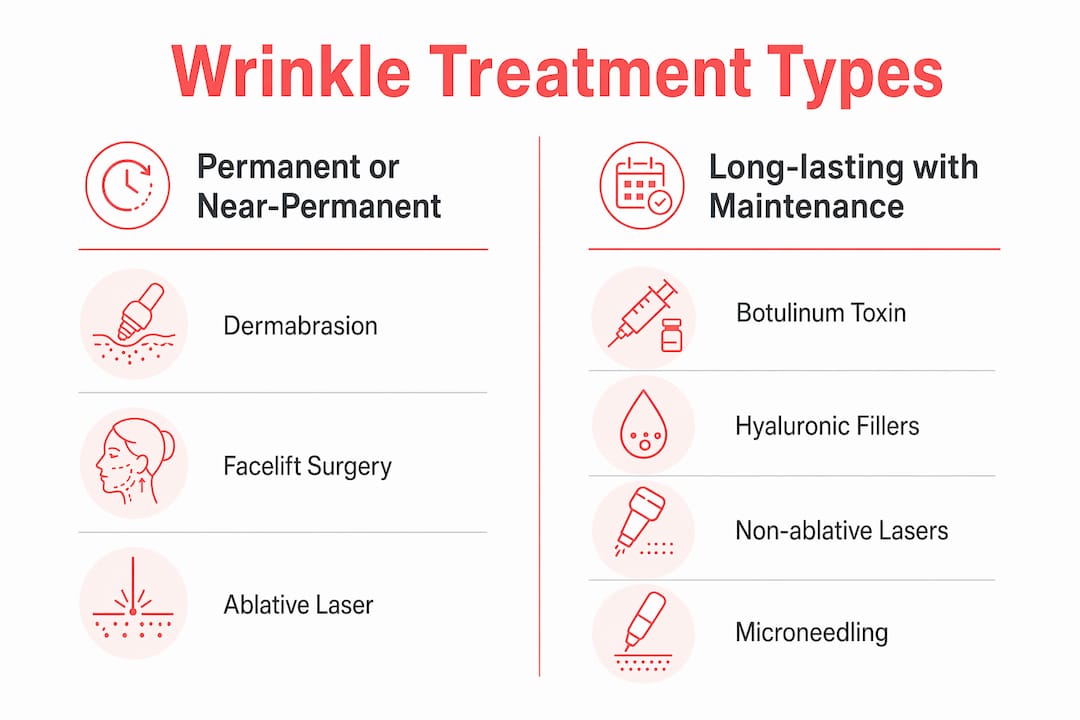
Microneedling, chemical peels, and microdermabrasion
These are the workhorses of surface-texture improvement. Microneedling creates controlled micro-injuries that trigger collagen remodeling; a series of 3–6 sessions is typical, with maintenance every 6–12 months. Chemical peels range from superficial (glycolic, lactic) with no real downtime to medium-depth (TCA) with 7–10 days of peeling. Microdermabrasion is the gentlest option, best for fine lines and overall radiance, with no downtime but requiring regular sessions to maintain results.
Treatment comparison at a glance:
| Treatment | Typical Duration of Results | Maintenance Frequency | Downtime |
|---|---|---|---|
| Botulinum toxin | 3–4 months | Every 3–4 months | Minimal |
| HA fillers | ~6 months | Every 6–12 months | Minimal |
| Bio-stimulators | 1–2 years | Every 1–2 years | Minimal |
| Non-ablative laser | 1–2 years | Annual or biannual | 1–3 days |
| Fractional CO2 laser | 3–5 years | Every 2–3 years | 5–10 days |
| Full-field CO2 laser | Up to ~5 years | Every 3–5 years | 14–21 days |
| Microneedling | 6–12 months | Every 6–12 months | 1–3 days |
| Chemical peel (medium) | 6–12 months | Every 6–12 months | 7–10 days |
| Dermabrasion | Permanent (treated layer) | Sun protection ongoing | Weeks |
| Facelift | 7–10 years | Secondary procedure optional | 2–4 weeks |
Recovery timelines, realistic costs, and financing
Planning for a wrinkle treatment means planning for both downtime and dollars. Neither should surprise you.
Recovery windows by procedure class:
- Injectables (Botox, fillers): No real downtime. Mild bruising resolves in 3–5 days. Final results visible within 1–2 weeks.
- Microneedling / superficial peels: 1–3 days of redness. Full results in 4–6 weeks after a series.
- Fractional CO2 laser: 5–10 days before returning to work. Redness may persist for several weeks.
- Full-field CO2 laser / dermabrasion: 14–21 days before social presentability. Erythema can last weeks to months.
- Facelift: 2–4 weeks before most social activities. Swelling fully resolves over 3–6 months.
Ballpark U.S. cost ranges by category (these are broad estimates; actual quotes vary by provider, geography, and complexity):
- Botulinum toxin: $300–$600 per treatment area per session
- HA fillers: $600–$1,200 per syringe
- Fractional laser resurfacing: $1,000–$3,500 per session
- Full-field CO2 laser: $2,500–$5,000+
- Dermabrasion: $1,500–$4,000+
- Facelift: $8,000–$20,000+ (surgeon fee, facility, anesthesia combined)
Cost reality check: Cosmetic wrinkle procedures are almost never covered by health insurance in the United States. Financing options through CareCredit, Alphaeon Credit, or in-office payment plans are widely available at plastic surgery and dermatology practices. Ask about these at your consultation.
Staged combination protocols from specialty laser clinics can deliver multi-year improvement when an ablative component is included, but they also increase both downtime and total cost. Budget for maintenance from the start, not as an afterthought.
Risks, side effects, and who should think carefully before proceeding
Every procedure carries a risk profile. The more aggressive the treatment, the longer that list gets.
Risks organized by procedure class:
- Injectables: Bruising, swelling, asymmetry, rare vascular occlusion (fillers). Botulinum toxin can cause temporary drooping if placed imprecisely.
- Energy-based devices (lasers, radiofrequency): Erythema, edema, dyspigmentation (especially in darker skin tones), scarring, herpes simplex reactivation in perioral treatments.
- Resurfacing (dermabrasion, deep peels): Prolonged healing, infection, permanent pigment changes, scarring, milia formation.
- Surgery (facelift): Hematoma, nerve injury, scarring, anesthesia complications, asymmetry, prolonged swelling.
Skin type and medical considerations:
Non-fractional CO2 laser resurfacing is not recommended for Fitzpatrick skin types IV–VI due to a significantly elevated risk of dyspigmentation. For these patients, Er:YAG lasers, fractional delivery, or non-ablative options are safer choices. Patients with bleeding disorders, active autoimmune conditions, or a history of keloid scarring require individualized assessment. Pregnancy is a contraindication for most cosmetic procedures.
University of Utah Health guidance notes that many patients begin preventive neuromodulator treatments in their 20s–30s to reduce the formation of deep static lines later. Candidates under 18 are not typical for most of these procedures.
Board certification matters. For any injectable, laser, or surgical procedure, verify that your provider is board-certified by the American Board of Dermatology or the American Board of Plastic Surgery. These credentials signal training standards, ethical oversight, and access to emergency protocols that protect you. Ask to see before-and-after photos of patients with your skin type and concern.
How combination therapy and a maintenance plan extend your results
No single procedure addresses every cause of facial aging at once. Mayo Clinic specialists recommend combining neuromodulators, fillers, and resurfacing where appropriate, because each modality targets a different driver: muscle movement, volume loss, and surface texture, respectively. Addressing all three simultaneously produces more reliable, longer-lasting results than any single treatment.
A sample multi-year maintenance framework:
- Year 1, ongoing: Neuromodulator injections every 3–4 months for dynamic lines. Daily SPF 30+ sunscreen and a retinoid-based home-care routine.
- Year 1–2: HA filler or bio-stimulator for volume loss, refreshed at 6–18 months depending on product used.
- Year 2–3: Fractional laser session or medium-depth peel for surface texture and collagen remodeling.
- Years 3–5: Repeat fractional laser or consider a full-field session if significant photoaging has accumulated.
- Ongoing between clinic visits: At-home energy devices (HIFU, sonophoresis) for collagen support and product absorption. A focused regimen with collagen-stimulating techniques extends the window between professional sessions.
Pro tips from the combination-therapy approach:
Pro Tip: Schedule your neuromodulator appointment 2 weeks before any filler or resurfacing session. Relaxing the muscles first gives the injector a more accurate baseline for volume placement.
Pro Tip: Avoid layering multiple potent actives (retinoids, AHAs, vitamin C) without clinician guidance. A focused regimen with retinoids and daily SPF is higher yield than stacking products that irritate the barrier and worsen fine lines.
Lifestyle changes that materially extend results include consistent sun protection, not smoking, adequate sleep, and staying hydrated. These are not optional add-ons. A facelift or laser resurfacing performed on someone who tans regularly will degrade faster than the same procedure on someone who is diligent about photoprotection. For age-specific home-care guidance, the dermatologist-recommended routine for your 50s is a practical reference.
How to choose a clinician and what to ask at your consultation
The provider matters as much as the procedure. A well-executed treatment by a qualified clinician outperforms the same procedure done poorly every time.
Credential and facility checklist:
- Board certification: American Board of Dermatology or American Board of Plastic Surgery
- Facility accreditation: office-based surgical suites should be accredited (AAAHC or JCAHO)
- Before-and-after photo review: ask specifically for patients with your skin type and concern
- Transparent pricing: no hidden fees for follow-up visits or touch-ups
- Clear infection-control protocols: single-use needles, sterile technique for injectables
Questions to ask at your consultation:
- Which wrinkle type am I primarily dealing with, and which procedure addresses it most effectively?
- What results are realistic for my skin type and age, and how long will they last?
- What are the specific risks for someone with my Fitzpatrick skin type and medical history?
- What is the full recovery timeline, and what will my skin look like during healing?
- How many times have you performed this specific procedure, and can I speak with a past patient?
- What maintenance will I need, and what is the estimated annual cost to sustain results?
- Are there alternatives I should consider before committing to this procedure?
When to walk away: If a provider cannot clearly answer questions about risks, downtime, or alternatives, or if they pressure you to book the same day, seek a second opinion. Reputable clinicians welcome questions and support informed decision-making. Getting a second opinion before any surgical or aggressive resurfacing procedure is standard practice, not an insult to the first provider.
For targeted concerns like periocular lines, the home treatment for wrinkles under eyes guide covers both clinical and at-home options specific to that area.
The role of at-home professional devices: what the Sonedaskincare VividLift can and cannot do
At-home professional devices occupy a specific and legitimate place in a wrinkle-reduction strategy. They are maintenance tools, not surgical alternatives. Understanding that distinction protects you from both disappointment and from skipping clinical care you actually need.
What the VividLift™ 2-in-1 HIFU+Sono device does
The VividLift™ combines two modalities. High-Intensity Focused Ultrasound (HIFU) delivers focused energy to the deeper skin layers to stimulate collagen production and support tissue firmness. Sonophoresis uses low-frequency ultrasound to drive active skincare ingredients deeper into the skin than topical application alone achieves, improving hydration and product efficacy. Sonedaskincare reports a 175% increase in skin hydration based on clinical testing of the device, and the brand reports 100% user satisfaction. These are company-reported figures; independent peer-reviewed trials for this specific device are not publicly listed.
What at-home HIFU devices can realistically deliver: Collagen stimulation, improved skin firmness over a consistent use period, enhanced absorption of serums and actives, and a meaningful maintenance effect between in-office treatments. They are not equivalent to clinical HIFU systems, which operate at higher energy levels under medical supervision.
Limitations: when you need a clinic or surgeon instead:
- Deep tissue lifting that requires surgical repositioning of the SMAS layer
- Significant skin laxity or jowling that has progressed beyond surface-level firmness
- Deep static folds requiring filler volume or surgical correction
- Any active skin condition, open wound, or recent resurfacing procedure in the treatment area
Safety pro tips for at-home device use:
Pro Tip: Always follow the VividLift Protocol Guide for session frequency and intensity settings. More is not better with energy devices. Overuse can irritate the skin barrier rather than support it.
- Do not use HIFU over active acne, rosacea flares, or broken skin.
- Apply a conductive gel or serum before each session as directed.
- Stop use and consult a dermatologist if you experience prolonged redness, swelling, or discomfort after sessions.
- Pair device use with a retinoid and SPF routine for compounded benefit.
The best home treatment for wrinkles guide provides a broader comparison of at-home options for readers evaluating device categories. For those interested in botanical-based topical adjuncts alongside device use, beauty rituals with botanical blends offers a practical complementary perspective.
Key Takeaways
There is no single permanent cure for all future wrinkles; the most effective strategy pairs targeted in-office procedures with consistent at-home maintenance and sun protection.
| Point | Details |
|---|---|
| Permanence is limited to treated tissue | Dermabrasion is permanent for removed layers; facelifts last 7–10 years; lasers up to ~5 years. |
| Maintenance is non-negotiable | Even surgical results degrade without SPF, retinoids, and scheduled in-office follow-up. |
| Combination therapy outperforms single treatments | Addressing muscle movement, volume loss, and surface texture together produces longer-lasting results. |
| Board certification protects you | Verify American Board of Dermatology or American Board of Plastic Surgery credentials before any procedure. |
| Sonedaskincare VividLift™ as adjunct | The VividLift™ HIFU+Sono device supports collagen maintenance and hydration between clinic visits, not as a surgical substitute. |
The honest case for a combined approach
The most common mistake people make when researching permanent wrinkle removal is treating it as a binary: either surgery or nothing. The clinical evidence points clearly in a different direction. Combination therapy, which addresses muscle movement, volume, and surface texture at the same time, consistently outperforms any single procedure, and the results of even the most aggressive surgical reset erode faster without disciplined home care.
At-home devices like the Sonedaskincare VividLift™ fit into that picture as a real, evidence-supported maintenance tool. They are not a shortcut past the clinic. They are what keeps your results looking their best between sessions, and they give you a degree of control over your skin’s collagen health that topicals alone cannot match. The honest recommendation is this: consult a board-certified clinician for any correction work, build a realistic maintenance plan, and use a professional-grade home device to extend and support those results. That combination is more sustainable, more cost-effective over time, and more realistic than chasing a single permanent fix.
The Sonedaskincare VividLift™: professional-grade maintenance at home
Clinic treatments correct. Home devices maintain. The Sonedaskincare VividLift™ 2-in-1 HIFU+Sono device is built for the second half of that equation: keeping your skin firm, hydrated, and collagen-supported between professional appointments, without the cost or downtime of repeat in-office sessions.

The VividLift™ combines HIFU technology for deep collagen stimulation with sonophoresis for enhanced ingredient absorption, delivering professional-level modalities in a device designed for home use. Sonedaskincare reports a 175% increase in skin hydration and 100% user satisfaction based on clinical testing. It is not a substitute for surgery, deep resurfacing, or any procedure requiring medical supervision. If you are a candidate for surgical correction or aggressive laser resurfacing, consult a board-certified dermatologist or plastic surgeon first.
For everyone building a long-term maintenance strategy, the VividLift™ is a clinically grounded option. Preorder the VividLift™ to secure your device, or explore the full product details and specs to see if it fits your skincare goals.
Authoritative sources and further reading
| Source | Why It’s Useful |
|---|---|
| Cleveland Clinic: Treatments to Reduce Wrinkles | Comprehensive clinical overview of permanent vs. long-lasting procedures, including dermabrasion and facelift durability data. |
| Mayo Clinic: Wrinkles Diagnosis and Treatment | Covers neuromodulators, fillers, combination therapy, and realistic duration expectations. |
| American Academy of Dermatology: Wrinkle Remedies | Evidence-based guidance on sunscreen, retinoids, and first-line prevention strategies. |
| StatPearls / NCBI: Ablative Laser Resurfacing | Peer-reviewed clinical detail on CO2 and Er:YAG lasers, Fitzpatrick skin type guidance, recovery timelines, and complication management. |
| Cosmetic Laser Dermatology: Fine Lines and Wrinkles Guide | Specialty clinic perspective on multi-device protocols, staged ablative combinations, and expected downtime. |
| University of Utah Health: Wrinkles and Volume Loss | Candidacy guidance including age considerations for preventive neuromodulator use. |
| Sonedaskincare: All About HIFU for Skincare | Educational overview of HIFU technology, clinical rationale, and how it applies to at-home device use. |
| Sonedaskincare: VividLift Protocol Guide | Practical usage instructions, session frequency, and safety protocols for the VividLift™ device. |