Is LED Safe After Botox? Timing Rules You Need to Know

Yes, LED and red light therapy are generally safe after Botox if you wait 24 to 48 hours and keep heat and pressure off the treated area. That window matters because Botox needs time to bind to nerve terminals, and anything that raises circulation or presses on the skin during that period could theoretically affect its placement. The core rules are simple enough to follow the same day you leave the injector’s chair.
- Do: Stay upright for at least 4 hours, skip facial massage, and wait a full 24 to 48 hours before any LED session on treated areas.
- Don’t: Take a hot bath, hit the sauna, or strap on a tight LED mask before that window closes.
- Don’t: Rub, press, or apply firm pressure to your forehead, brow, or jawline while the toxin is still settling.
Pro Tip: If you’re not sure whether 24 or 48 hours applies to your case, default to 48. Botulinum toxin binding and internalization typically wraps up within a 24 to 72 hour window, so the extra day costs you nothing and removes the guesswork.
TL;DR:
- Wait at least 24 hours, preferably 48 hours, before using LED or red light therapy on treated areas to minimize the risk of toxin displacement.
- Avoid heat sources like hot baths, saunas, and tight LED masks during the first 48 hours after Botox treatment.
- Extend the waiting period to 48 to 72 hours if you received multiple injections, fillers, or have visible bruising or swelling.
- Begin LED sessions with low intensity for 5 to 10 minutes, gradually increasing duration to 10 to 20 minutes several times per week after the initial waiting time.
- Use non-pressing, loosely fitted devices to prevent applying pressure on treated areas during the recovery window to protect your Botox results.
Table of Contents
- Can You Use Red Light After Botox? The Science Behind the Wait
- When Can You Start LED Treatment Following Botox?
- Your Post Botox LED Protocol: Wavelengths, Timing, and Session Length
- Warning Signs to Watch For After Combining Botox and LED
- Using LED With Botox and Filler: Why the Timeline Changes
- The Soneda Approach to Safe Post Botox LED Use
- Why the “Wait and See” Advice Undersells What You Can Actually Do
- Ready to Build a Safer At-Home LED Routine?
- Key Takeaways
- Sources
Can You Use Red Light After Botox? The Science Behind the Wait
Botox works by blocking nerve signals to targeted muscles, but it doesn’t do that instantly. After injection, the toxin has to travel to nerve terminals, bind to receptor sites, and get internalized into the cell. Pharmacology research places that process in a 24 to 72 hour window, which is exactly why injectors and skincare brands alike converge on a 24 to 48 hour caution period before you touch the treated area with anything more intense than a gentle cleanser.
Red and near infrared light work through a completely different mechanism. LED devices trigger photobiomodulation, a process where light energy stimulates mitochondrial activity, boosts microcirculation, and can help reduce inflammation and bruising in some clinical settings, according to a photobiomodulation review. None of that light exposure breaks down botulinum toxin chemically. The concern isn’t that LED destroys Botox. It’s mechanical and thermal: increased blood flow and skin warming could, in theory, encourage the toxin to migrate slightly before it fully binds.
Clinical centers and vendor guidance converge on a cautious 24 to 48 hour wait, and the practical risk during that window is mechanical or thermal displacement of the toxin, not any chemical interaction between light and botulinum protein itself.
Here’s what the evidence actually supports and where it stops:
- Animal model research shows elevated temperatures shortly after injection can reduce botulinum toxin efficacy, which is the mechanistic basis for avoiding heat.
- There’s no large human clinical trial testing LED therapy specifically in the first 48 hours post Botox. The guidance is extrapolated from toxin pharmacology and heat studies, not a dedicated trial.
- The Cleveland Clinic frames LED as low risk when used correctly, but it also flags limited direct evidence for combining light therapy with recent procedures and recommends checking with your provider first.
That gap between mechanistic plausibility and direct clinical proof is worth sitting with. The 24 to 48 hour rule isn’t a myth, but it’s also not backed by a randomized trial that measured wrinkle outcomes in people who used LED masks at hour six versus hour thirty. It’s a sensible, low-cost precaution built on how the toxin behaves and how light affects tissue, and treating it that way, rather than as an ironclad law, helps you make smarter judgment calls when your situation doesn’t fit the textbook case.
When Can You Start LED Treatment Following Botox?
The baseline is straightforward: wait at least 24 hours before any LED exposure on treated areas, and lean toward 48 hours if you want the safer margin. Most people who had a standard forehead or crow’s feet treatment with a moderate dose fall into the 24 to 48 hour category comfortably. But “standard” doesn’t describe everyone, and a few common scenarios call for pushing that timeline back further.
- Extensive injection sessions. If you had Botox across multiple zones (forehead, glabella, crow’s feet, and jawline in one visit), give yourself the full 48 hours minimum, and consider 72 if you’re prone to bruising.
- Concurrent filler work. Getting Botox and dermal filler in the same appointment changes the calculus entirely, which the next section covers in detail.
- Visible bruising or swelling. Any bruising at the injection site is your body telling you the tissue is still irritated. Wait until it visibly fades before introducing LED, heat, or pressure.
- Recent antibiotics or photosensitizing medications. Certain antibiotics, retinoid prescriptions, and other photosensitizing drugs can make skin more reactive to light exposure. If you’re on one, ask your prescriber or injector before combining it with LED.
- A history of sensitive or reactive skin. If your skin flares easily, giving it 48 to 72 hours of quiet recovery time before adding a new stimulus is the more conservative and often smarter play.
What’s actually fine the same day? LED on parts of your body that weren’t injected. If you had a Botox session focused on your forehead, there’s no reason to avoid using an LED panel on your chest or hands that same afternoon. The caution applies specifically to the treated zone and its immediate surrounding tissue, not your entire body.
What to avoid in that first 24 hours regardless of device: skip facial massage, avoid lying face down, keep workouts light enough that you’re not flushed and sweating, and hold off on any skincare tool that presses firmly against your skin. A partner clinic’s rundown of post Botox precautions echoes the same core list: no rubbing, no heat, no strenuous exercise, and no lying down for several hours after treatment.
Pro Tip: Set a calendar reminder for 48 hours after your appointment instead of trying to eyeball it. It’s a small step, but it removes the temptation to rationalize “close enough” after a long day when you just want to relax under your LED mask.
Your Post Botox LED Protocol: Wavelengths, Timing, and Session Length
Once your waiting period has passed, the actual LED protocol you follow matters almost as much as the timing itself. Two wavelength ranges dominate facial LED devices, and each serves a distinct purpose.
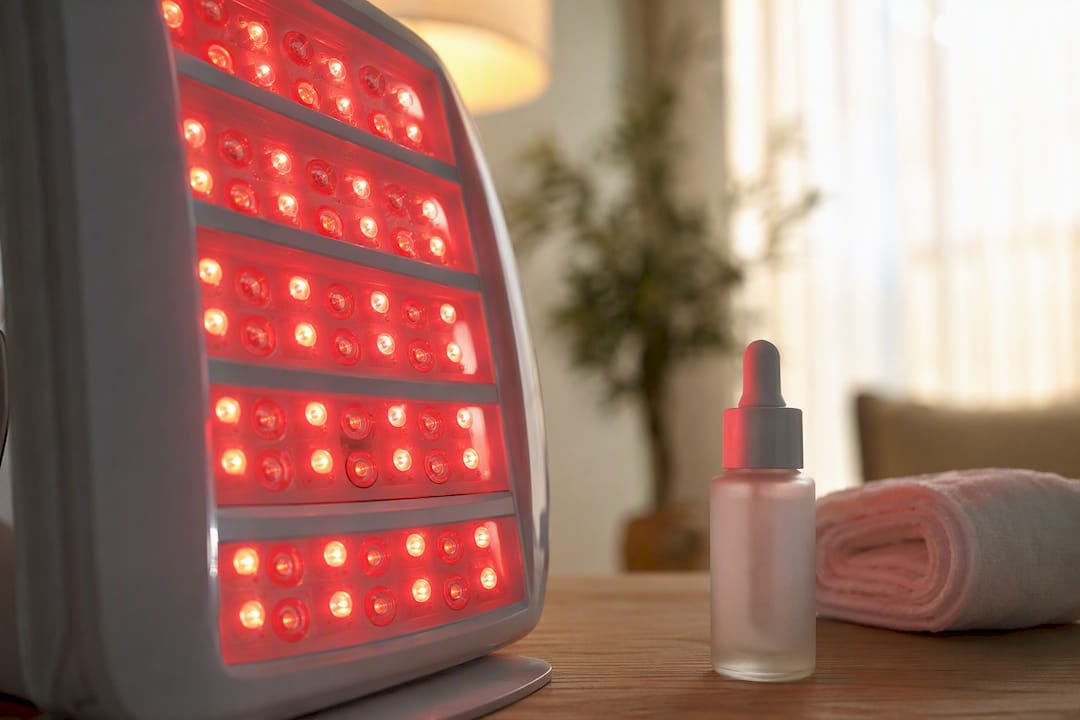
Red light, typically in the 630 to 660 nanometer range, penetrates the upper skin layers and is the wavelength most associated with collagen stimulation, tone improvement, and surface healing. Near infrared light, usually 810 to 850 nanometers, reaches deeper into tissue and is more associated with circulation support and deeper repair processes. Devices that combine both bands, sometimes called dual wavelength or multi wavelength systems, aim to address surface and deeper skin concerns in the same session, a design detail worth checking for in any LED therapy device you’re considering.
Here’s a session structure that respects the post Botox recovery window without shortchanging results:
- First session (after your waiting period): 5 to 10 minutes at the lowest available intensity setting. This isn’t the time to test your device’s maximum output.
- Weeks one through two: Progress to 10 to 20 minutes per session, 3 to 5 times per week, assuming no irritation, bruising, or discomfort shows up.
- Maintenance phase: Once your skin has settled and Botox results have stabilized, drop to 1 to 2 sessions per week to sustain the collagen and tone benefits without overdoing it.
Mask and panel fit deserves its own callout, because this is where a lot of people accidentally undo their own caution. For the first 48 hours after your appointment, avoid any mask that clips tightly around your jaw or presses against your forehead. A snug LED mask that seals against the skin creates localized pressure and can trap heat, both of which work against the “no pressure, no heat” rule you just spent two days honoring. A looser mask design or an open LED panel positioned a few inches from your face is the safer choice during this early period. If your device runs noticeably warm to the touch after a few minutes, that’s also a signal to dial back the session length or increase the distance between your skin and the light source.
Roughly 86% of LED and photobiomodulation research cited in dermatology literature uses sessions in that 10 to 20 minute range at these wavelengths, which is part of why that window has become the practical standard for consumer devices too.
If you’re planning to use an in-office LED treatment rather than an at-home device, tell your injector ahead of time. Aesthetic providers coordinate treatment plans regularly, and letting them know you want LED sessions on the calendar lets them adjust your Botox appointment timing or flag any reason to wait longer based on your specific dose and injection sites.
Warning Signs to Watch For After Combining Botox and LED
Most people move through the post Botox recovery period without incident, but knowing the difference between a normal, temporary reaction and something worth calling your injector about matters more than any wavelength chart.
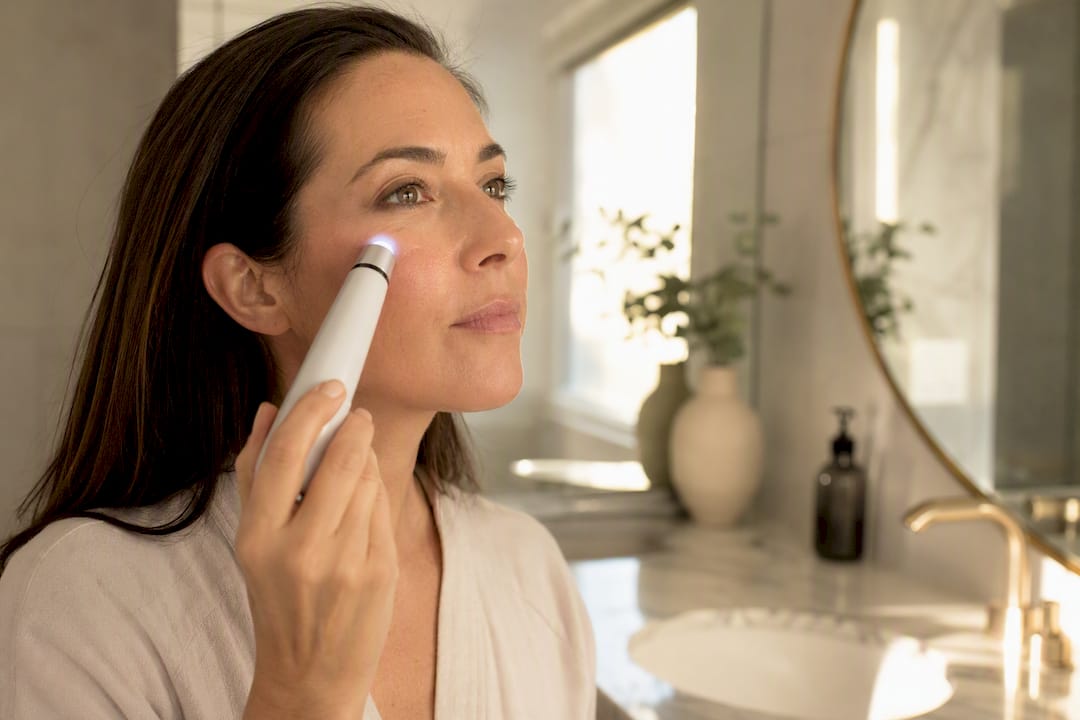
Normal and expected: mild redness immediately after injection, small injection site bumps that resolve within hours, slight tenderness at injection points, and light bruising that fades over several days.
Signs that warrant a call to your injector:
- Bruising that worsens or spreads rather than fading over the following days.
- New or unexpected asymmetry, especially around the brows or eyelids, that wasn’t discussed as a possible outcome.
- Persistent or worsening pain at injection sites beyond the first day or two.
- Eyelid or brow drooping, which can indicate the toxin has spread beyond the intended muscle.
Heat and pressure are the two variables you have the most control over, and they’re worth taking seriously. Skip hot tubs, saunas, steam rooms, and heavy cardio for at least 24 hours, since all of them raise core temperature and blood flow in ways that mirror the exact mechanism heat-related studies flagged as a risk to toxin efficacy. Tight LED masks fall into the same category as tight workout headbands or snug sleep masks: anything that presses firmly on treated muscle for an extended period should wait.
Before your first LED session, check your device’s contraindication list for anything related to photosensitizing medications, active skin infections, or recent injectable procedures, and review the FDA’s guidance on medical device claims if you want to understand how at-home devices are classified and regulated.
Pro Tip: Keep a simple note on your phone logging your Botox date, your LED start date, and how your skin responded. If something feels off later, that timeline makes the conversation with your injector faster and more useful.
Using LED With Botox and Filler: Why the Timeline Changes
Combining Botox with dermal filler in the same appointment changes your recovery math, and treating both procedures identically is a common mistake. Botox is injected into muscle tissue and works by blocking nerve signals; filler sits under the skin to add volume, and it carries its own separate risks around swelling, vascular compression, and migration under pressure.
Because filler introduces actual physical material under the skin rather than a neurotoxin acting on nerve endings, added heat or pressure in the days after injection carries a different kind of risk. Swelling from filler can also mask early signs of bruising or complications, making it harder to judge when your skin has actually settled.
- If you had both Botox and filler in the same session, extend your LED waiting period to 48 to 72 hours, or follow whatever specific timeline your injector recommends.
- If visible swelling or bruising from the filler is still present at the 48 hour mark, wait until it has resolved before introducing any LED exposure, heat, or pressure to that area.
- When in doubt, the more conservative combined procedure always takes precedence over the shorter Botox-only guideline.
The Soneda Approach to Safe Post Botox LED Use
Every protocol in this guide, from wavelength selection to mask fit, reflects how Soneda designs its own devices. Our multi wavelength LED systems combine red and near infrared light in the same ranges discussed above, and we build our masks and panels to avoid the tight, pressing fit that raises concern in the first 48 hours after injectables.
That design philosophy shows up directly in devices like the Sculpt2 EMS facial toning device, which pairs four LED wavelengths with a session structure built for gradual, low intensity starts rather than maximum output from day one. If you’re researching which at-home device style fits a conservative post-procedure routine, our breakdown of panel versus mask options walks through the fit and pressure differences that matter most in that early recovery window.
- Multi wavelength LED (red and near infrared) matches the bands supported by current photobiomodulation research.
- Session length guidance starts low and builds gradually, aligning with the conservative timeline recommended after Botox.
- Non-pressing mask and panel designs avoid the tight-fit concern flagged for the first 48 hours post-injection.
The takeaway isn’t that any single device makes the waiting period unnecessary. It’s that the right device, used on the right schedule, supports the same conservative approach your injector would recommend anyway.
Why the “Wait and See” Advice Undersells What You Can Actually Do
Most advice on this topic stops at “wait 24 to 48 hours” and leaves you there, which technically answers the safety question but skips the part readers actually care about: what to do with that waiting period instead of just watching the clock. The conventional framing treats those two days as dead time. They’re not. That window is exactly when non-treated areas, your neck, chest, or hands, can get the LED attention your face is waiting on, and it’s also when setting up a realistic long-term session plan actually pays off.
Where the standard advice falls short is nuance around combined procedures. A lot of generic guides give one blanket number, usually 24 hours, without distinguishing Botox-only patients from people who also had filler, or acknowledging that bruising severity should override any fixed timeline. The honest answer is conditional, not universal.
My priority for readers: get the timing right first, but don’t stop there. Build a realistic wavelength and session schedule for the weeks after, because that consistency is what actually drives the collagen and tone benefits people are chasing.
— Customer
Ready to Build a Safer At-Home LED Routine?
Waiting out the 24 to 48 hour window is only half the equation. What you use once that window closes determines whether your routine actually supports your Botox results or just sits in a drawer after a few sessions. Sonedaskincare designs devices around the same gentle, gradual approach this guide recommends: non-pressing masks, multi wavelength LED in the clinically referenced red and near infrared bands, and session plans built to start low and progress safely.
The VividLift HIFU device pairs well with a post Botox LED routine once your skin has fully settled, combining high-intensity focused ultrasound with sonophoresis to support the collagen and lifting benefits your injectable results are already working toward. If you want to understand how HIFU and LED complement each other before committing, our HIFU explainer page breaks down the technology in plain terms. Ready to see which device fits your skin goals? Preorder VividLift today and build a routine that respects your recovery timeline while still moving your results forward.
Key Takeaways
Safe LED use after Botox depends on waiting 24 to 48 hours, avoiding heat and pressure on treated areas, and adjusting your timeline when filler or bruising is involved.
| Point | Details |
|---|---|
| Baseline waiting period | Wait at least 24 hours before LED on treated areas, with 48 hours as the safer default. |
| Watch for heat and pressure | Skip saunas, hot baths, and tight LED masks for the first 24 to 48 hours after injection. |
| Extend timing for filler | Combined Botox and filler sessions call for a 48 to 72 hour wait, or longer if swelling persists. |
| Start low, build gradually | Begin with 5 to 10 minute sessions at low intensity, then progress to 10 to 20 minutes 3 to 5 times weekly. |
| Choose gentle device design | Sonedaskincare’s multi wavelength LED devices use non-pressing masks suited to conservative post-Botox routines. |
This article is general information, not a substitute for advice from a qualified doctor. Consult a qualified healthcare professional about your own circumstances before acting on anything here.
Sources
- Photobiomodulation review (PMC5523874)
- Bhidayasiri & Truong — botulinum toxin pharmacology (PubMed)
- Cleveland Clinic — Red light therapy overview
- Park et al. study on temperature effects (PubMed)